Adam (monk)
Videos
Adam, also known by his Chinese name Jingjing, was an 8th-century Syriac Christian monk and scholar in China. He composed the text on the Nestorian Stele, which described the history of the Church of
"Adam" in Syriac in the Xian Nestorian Stele, in Hebrew and in Written Hebrew (reads from right to left)


Nestorians 1

Rubbing of a Nestorian Cross at the Shih tzu ssu 1
Syriac alphabet
Videos
The Syriac alphabet is a writing system primarily used to write the Syriac language since the 1st century. It is one of the Semitic abjads descending from the Aramaic alphabet through the Palmyrene al
Adam (monk)
…he is also the author of the later Jingjiao Documents. Scholars place Adam's probable birth at around 750 or 751. Adam's father was named Yazedbozid (Syriac: ܝܙܕܒܘܙܝܕ Yazedbuzid, Chinese: 伊斯; Yīsī), who was part of a fighting unit invited to come to China by the Tang court to help quell the An Lushan…
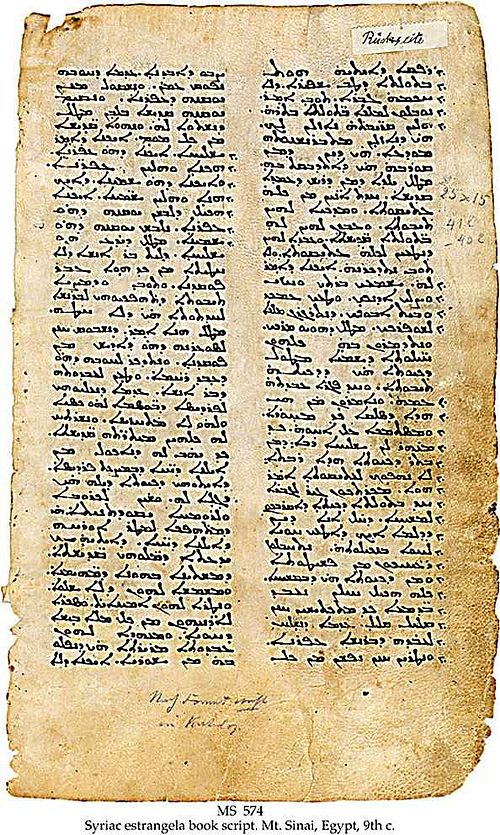
A 9th century ʾEsṭrangēlā manuscript of John Chrysostom's Homily on the Gospel of John.

A 17th century Maḏnḥāyā liturgical manuscript from the Vatican Library. Note the title written in ʾEsṭrangēlā.

A 16th century Sertā manuscript of the New Testament Epistle of James.

An example of Garshuni: a 16th-century Arabic-language manuscript written in the Syriac Serṭā script.