Age of Discovery
Videos
The Age of Discovery, also known as the Age of Exploration, was part of the early modern period and overlapped with the Age of Sail. It was a period from approximately the 15th to the 17th century, du

Mayflower II, a replica of the 17th-century English sailing ship Mayflower which transported a group of Pilgrim families from England to the New World in 1620

A replica of the French carrack La Grande Hermine, which was used by Jacques Cartier that participated in decisive events of France in the colonization of Canada in 1534

A replica of the Portuguese carrack Flor de la Mar, which participated in decisive events for Portugal in the Indian Ocean until her sinking in November 1511

A replica of the Spanish carrack Santa Maria which was used by Christopher Columbus in his first expedition across the Atlantic Ocean in 1492, arriving to the New World
During the Age of Discovery, a large scale colonization of the Americas, involving a number of European countries, took place primarily between the late 15th century and early 19th century. The Norse
Age of Discovery
…and laid the groundwork for globalization. The extensive overseas exploration, particularly the opening of maritime routes to the East Indies and European colonization of the Americas by the Spaniards and Portuguese, later joined by the English, French, and Dutch, spurred international global trade. The interconnected global economy…

Christopher Columbus and his crew are landing in the West Indies, on an island named San Salvador, on October 12, 1492.

The Discovery of America (Johann Moritz Rugendas)
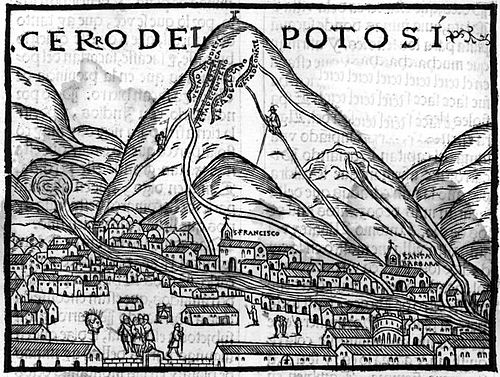
The silver mountain of Potosí, in what is now Bolivia. It was the source of vast amounts of silver that transformed the world economy.

Discovery of Brazil