Akzidenz-Grotesk
Videos
Akzidenz-Grotesk is a sans-serif typeface family originally released by the Berthold Type Foundry of Berlin in 1898. The German Akzidenz indicates its intended use as a typeface for commercial print r

Akzidenz-Grotesk seems to be a derivative of this shadowed sans-serif (Schattierte Grotesk, detail below) released by the Bauer & Co. foundry of Stuttgart in 1896, the year before it was taken over by Berthold.

A 1905 advertisement for Berthold in a Swedish printing journal, offering Royal-Grotesk, later branded as the light weight of Akzidenz-Grotesk, for sale. The sans-serif type is used in a secondary role underneath a more decorative heading face.

Font designer Dan Reynolds (above) and graphic design professor Indra Kupferschmid (below) have documented many aspects of the early history of Akzidenz-Grotesk.
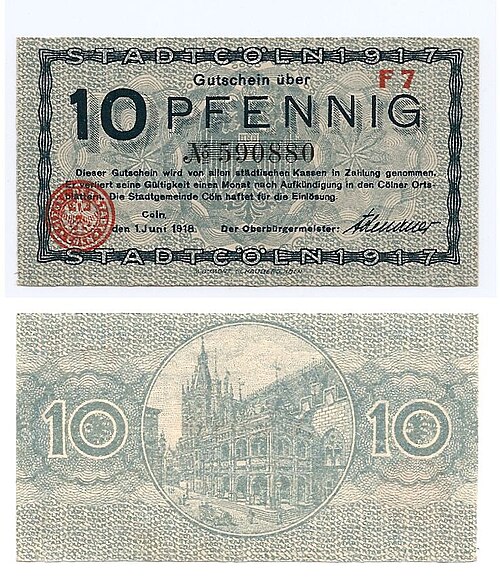
A German banknote from 1918, using a range of sans-serifs of the period
Helvetica
Videos
Helvetica, also known by its original name Neue Haas Grotesk, is a widely used sans-serif typeface developed in 1957 by Swiss typeface designer Max Miedinger and Eduard Hoffmann.
Akzidenz-Grotesk
…record album covers as early as 1957." In 1957, three notable competitors of Akzidenz-Grotesk appeared intended to compete with its growing popularity: Helvetica from the Haas foundry, with a very high x-height and tight letterspacing, Univers from Deberny & Peignot, with a large range of weights and widths, and…

A 1969 poster by Robert Geisser exemplifying the "Swiss" style of the 1950s and 60s: solid red colour, simple images, and neo-grotesque sans-serif type, all in lowercase. This design appears to use Helvetica or a close imitation.

An early Helvetica specimen in the asymmetric Swiss modernist style, showing tight spacing in the poster style of the period

A hand-cut rubylith master used in the 1983 phototypesetting release of Neue Helvetica

A Helvetica Flair specimen sheet