Amel-Marduk
Videos
Photos
Amel-Marduk, also known as Awil-Marduk, or under the biblical rendition of his name, Evil-Merodach, was the third king of the Neo-Babylonian Empire, ruling from 562 BC until his overthrow and murder in 560 BC. He was the successor of Nebuchadnezzar II. On account of the small number of surviving cuneiform sources, little is known of Amel-Marduk's reign and actions as king.

The tablet recording the plea by the jailed prince Nabu-shum-ukin, probably the future Amel-Marduk

17th-century portraits of Amel-Marduk ('Evilmerodach') and his successor Neriglissar ('Nerigolossor')
Neo-Babylonian Empire
Videos
Photos
The Neo-Babylonian Empire or Second Babylonian Empire, historically known as the Chaldean Empire, was the last polity ruled by monarchs native to Mesopotamia. Beginning with the coronation of Nabopolassar as the King of Babylon in 626 BC and being firmly established through the fall of the Assyrian Empire in 612 BC, the Neo-Babylonian Empire was conquered by the Achaemenid Persian Empire in 539 BC, marking the collapse of the Chaldean dynasty less than a century after its founding.
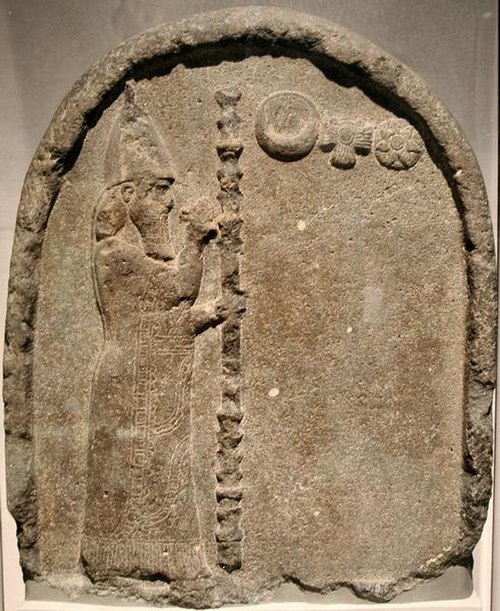
Stele of Nabonidus exhibited in the British Museum. The king is shown praying to the Moon, the Sun and Venus and is depicted as being the closest to the Moon.

Illustration of the inhabitants of Babylon deriding the Achaemenid king Darius I during the revolt of Nebuchadnezzar III in 522 BC. From the History of Darius the Great (1900) by Jacob Abbott.

Partial view of the ruins of Babylon in modern-day Iraq.

9th century BC depiction from a cylinder seal of the Statue of Marduk, Babylon's patron deity Marduk's main cult image in the city.