American woodcock
Videos
The American woodcock, sometimes colloquially referred to as the timberdoodle, mudbat, becasse, bogsucker, brush snipe, night partridge, or Labrador twister is a small shorebird species found primaril

American woodcock

Woodcock, with attenuate primaries, natural size, 1891

Downy young are already well-camouflaged.
Aposematism
Videos
Aposematism is the advertising by an animal, whether terrestrial or marine, to potential predators that it is not worth attacking or eating. This unprofitability may consist of any defences that make
American woodcock
…tail feathers while rocking, drawing attention to themselves. This theory is supported by research done by John Alcock who believes this is a type of aposematism. How many woodcock were present in eastern North America before European settlement is unknown. Colonial agriculture, with its patchwork of family farms…
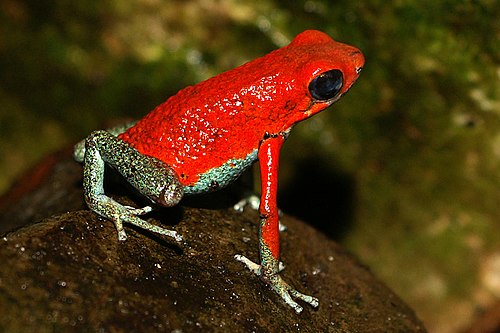
The bright colours of this granular poison frog signal a warning to predators of its toxicity.

The honey badger's reverse countershading makes it conspicuous, honestly signalling its ability to defend itself through its aggressive temperament and its sharp teeth and claws.

Flamboyant cuttlefish colours warn of toxicity

Hycleus lugens, an aposematically coloured beetle