The question of the race of the people of ancient Egypt was raised historically as a product of the early racial concepts of the 18th and 19th centuries, and was linked to models of racial hierarchy p
Princess Nefertiabet, likely daughter of king Sneferu, sister of king Khufu ("Cheops"), ca. 2589-2566 BCE. The original colors of the stele were well preserved to this day, including her skin color. Louvre Museum


Pair of guardian statuettes, depicting Middle Kingdom pharaohs, presumably Senusret I or Amenemhat II, with the white crown of Upper Egypt (left), the other with the red crown of Lower Egypt. Wood, from el-Lisht, ca. 1919–1885 BCE, 12th dynasty, Middle Kingdom (Egyptian Museum, main floor, room 22, JE44951, and Metropolitan Museum of Art, 14.3.17). The 12th dynasty had origins in Ta-Seti, Upper Egypt.

1977 Meeting for the General History of Africa

2010 Scientific Committee Meeting for the General History of Africa
Tutankhamun
Videos
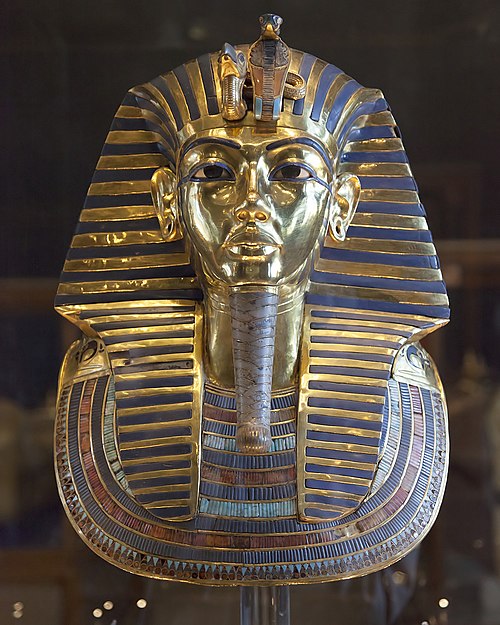
Tutankhamun or Tutankhamen, was the antepenultimate pharaoh of the Eighteenth Dynasty of ancient Egypt, who ruled c. 1332 – 1323 BC. Born Tutankhaten, he instituted the restoration of the traditional
Tutankhamun's golden funerary mask at the Grand Egyptian Museum in Giza, Egypt

Tutankhamun and Ankhesenamun with two anonymous children (below), who are either their offspring or the representation of the King and the Queen themselves.

The throne of Tutankhamun, the Aten depicted above

A statue of the god Amun, with the features of Tutankhamun.