Tutankhamun
Videos
Tutankhamun or Tutankhamen, was the third to last pharaoh of the Eighteenth Dynasty of ancient Egypt, who ruled c. 1332 – 1323 BC, dying at about the age of 18. Born Tutankhaten, his administration re
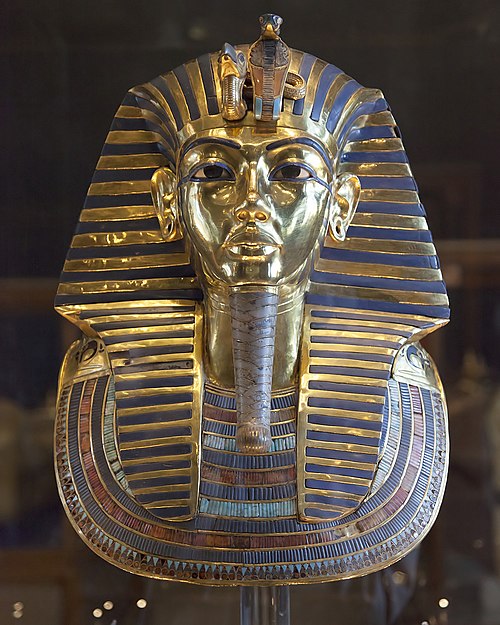
Tutankhamun's golden funerary mask at the Grand Egyptian Museum in Giza, Egypt

Tutankhamun and Ankhesenamun with two anonymous children (below), who are either their offspring or the representation of the King and the Queen themselves.

The throne of Tutankhamun, the Aten depicted above

A statue of the god Amun, with the features of Tutankhamun.
Akhenaten
Videos
Akhenaten, also spelled Akhenaton, Echnaton, and Khuenaten, was an ancient Egyptian pharaoh reigning c. 1353–1336 or 1351–1334 BC, the tenth ruler of the Eighteenth Dynasty. Originally named Amenhotep
Tutankhamun
…of their circumstances. Since the discovery of his tomb, he has been referred to colloquially as "King Tut". Tutankhamun was born in the reign of Akhenaten, during the Amarna Period of the late Eighteenth Dynasty of Egypt. His original name was Tutankhaten or Tutankhuaten, meaning "living image of Aten…

Statue of Akhenaten at the Egyptian Museum

Akhenaten, Nefertiti and their children

Alabaster sunken relief depicting Akhenaten (head lost), Nefertiti, and daughter Meritaten. Early Aten cartouches on king's arm and chest. From Amarna, Egypt. 18th Dynasty.The Petrie Museum of Egyptian Archaeology, London. With thanks to the Petrie Museum of Egyptian Archaeology, UCL.

This limestone relief of a royal couple in the Amarna style has variously been attributed as Akhenaten and Nefertiti, Smenkhkare and Meritaten, or Tutankhamun and Ankhesenamun.