Aniconism in Islam
Videos
In Islamic art, the avoidance of images of sentient beings, or aniconism, stems in part from the prohibition of idolatry in Islam and in part from the belief that the creation of living forms is God's

Interior of Sheikh Lotfollah Mosque in Isfahan, Iran

Interior of the Dome of the Rock, Jerusalem

The Pisa Griffin, probably created in the 11th century in Al-Andalus, is the largest Islamic figurative sculpture to survive.

Muqarnas, as seen from below, in the iwan entrance to the Shah Mosque, Isfahan, Iran
Aniconism
Videos
Aniconism is the cultural absence of artistic representations of the natural and supernatural worlds, or it is the absence of representations of certain figures in religions. The prohibition of materi
Aniconism in Islam
…In Islamic art, the avoidance of images of sentient beings, or aniconism, stems in part from the prohibition of idolatry in Islam and in part from the belief that the creation of living forms is God's prerogative. The Quran…
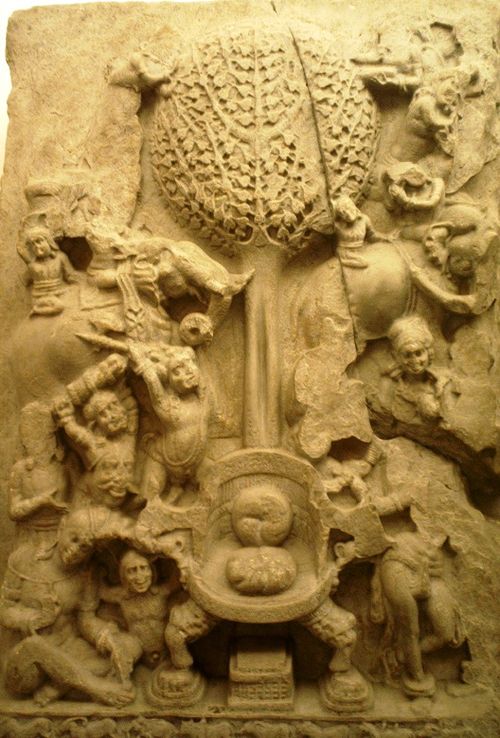
An aniconic representation of Mara's assault on the Buddha, 2nd century CE, Amaravati, India.

Traditional flower offering to the aniconic Shiva linga in Varanasi

Persian miniature painting from the 16th century AD, depicting Muhammad, his face veiled, ascending on the Buraq into the Heavens, a journey known as the Mi'raj.

14th-century hagaddah depicting Moses leading the people (David Kaufmann collection)