Anti-Hungarian sentiment is dislike, distrust, discrimination, or xenophobia directed against the Hungarians. It can involve hatred, grievance, distrust, intimidation, fear, and hostility towards the Hungarian people, language and culture.
Ján Slota, the ex-chairman of Slovak National Party SNS, claimed that the Hungarian minority of Slovakia "is a tumour in the body of the Slovak nation".
The Banate of Bosnia, or Bosnian Banate, was a medieval state based in what is today Bosnia and Herzegovina. Although Hungarian kings viewed Bosnia as part of Hungarian Crown Lands, the Banate of Bosnia was a de facto independent state for most of its existence. It was founded in the mid-12th century and existed until 1377 with interruptions under the Šubić family between 1299 and 1324. In 1377, it was elevated to a kingdom. The greater part of its history was marked by a religiopolitical controversy revolving around the native Christian Bosnian Church condemned as heretical by the dominant Chalcedonian Christian churches, namely the Catholic and Eastern Orthodox churches, with the Catholic Church being particularly antagonistic and persecuting its members through the Hungarians.
Kulin Ban's plate from 1193, found in Biskupići
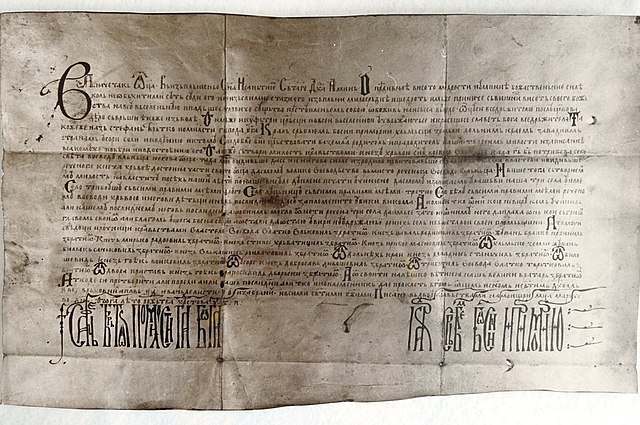
Charter of King Tvrtko I Kotromanić, written in Moštre
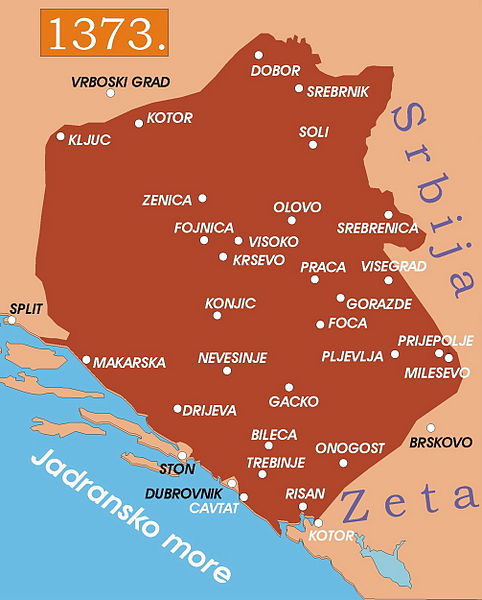
The Banate of Bosnia in 1373
Charter of Ban Kulin, trade agreement between Bosnia and Republic of Ragusa