Apollo (spacecraft)
Videos
The Apollo spacecraft was composed of three parts designed to accomplish the American Apollo program's goal of landing astronauts on the Moon by the end of the 1960s and returning them safely to Earth

Complete Apollo spacecraft stack: launch escape system, command module, service module, Lunar Module, and spacecraft–LM adapter
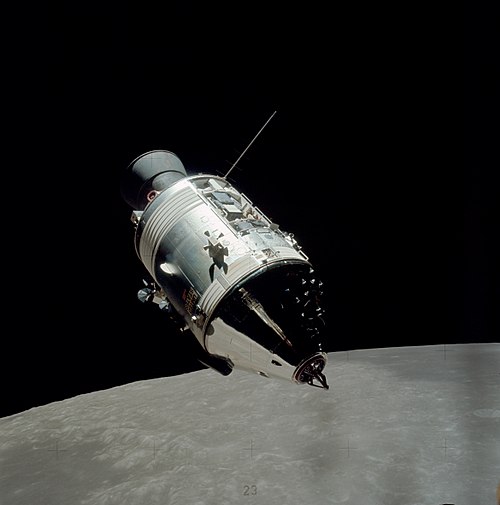
The Apollo 17 CSM seen in lunar orbit from the ascent stage of the Lunar Module

Apollo Command Module and its position on top of Saturn V

Apollo Service Module
Apollo program
Videos
The Apollo program, also known as Project Apollo, was the United States human spaceflight program led by NASA, which landed the first humans on the Moon in 1969. Apollo was conceived in 1960 in the Dw
Apollo (spacecraft)
…The Apollo spacecraft was composed of three parts designed to accomplish the American Apollo program's goal of landing astronauts on the Moon by the end of the 1960s and returning them safely to Earth. The expendable (single-use) spacecraft consisted…

Buzz Aldrin (pictured) walked on the Moon with Neil Armstrong, on Apollo 11, July 20–21, 1969.

The Apollo 17 Lunar Roving Vehicle
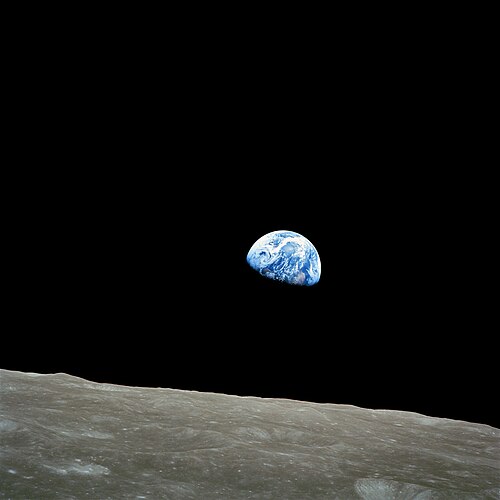
Earthrise, the iconic 1968 image from Apollo 8 taken by astronaut William Anders
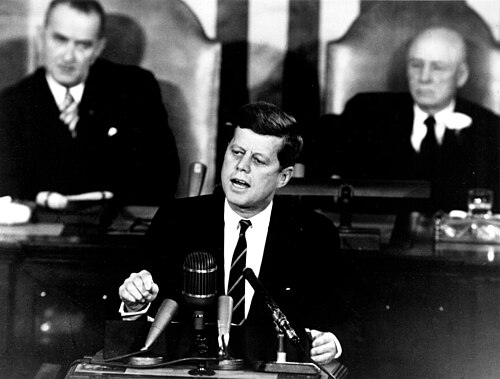
President Kennedy delivers his proposal to put a man on the Moon before a joint session of Congress, May 25, 1961.