Apollo 11
Videos
Apollo 11 was the American spaceflight that first landed humans on the Moon, and the fifth crewed mission of NASA's Apollo program. The mission was crewed by Commander Neil Armstrong, Command Module P
Buzz Aldrin on the Moon in a photograph taken by Neil Armstrong, who can be seen in the visor reflection along with Earth, the Lunar Module Eagle, and the U.S. flag


Left to right: Armstrong, Collins, and AldrinApollo program← Apollo 10Apollo 12 →
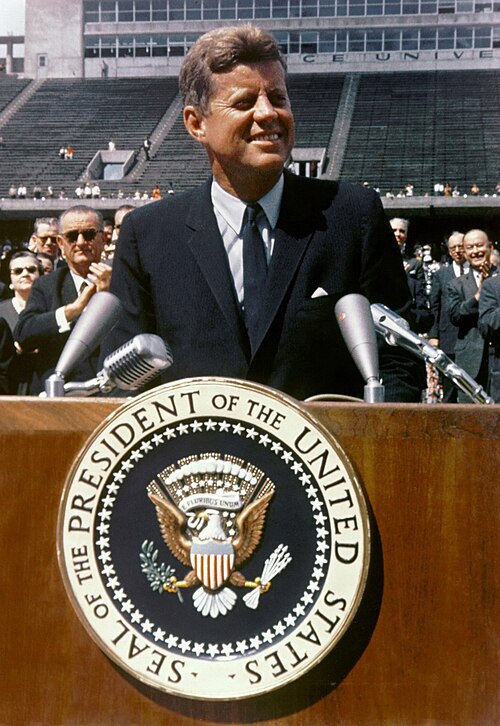
President John F. Kennedy speaking at Rice University on September 12, 1962

CAPCOM Charles Duke (left), with backup crewmembers Lovell and Haise listening in during Apollo 11's descent
Apollo 12
Videos
Apollo 12 was the sixth crewed flight in the United States Apollo program and the second to land on the Moon. It was launched on November 14, 1969, by NASA from the Kennedy Space Center in Florida, la
Apollo 11
…deserved to command his own mission (eventually Apollo 13). The Apollo 11 prime crew had none of the close cheerful camaraderie characterized by that of Apollo 12. Instead, they forged an amiable working relationship. Armstrong in particular was notoriously aloof, but Collins, who considered himself a loner…

Commander Pete Conrad studies the Surveyor 3 spacecraft, which had landed two years previously; the Apollo Lunar Module, Intrepid, can be seen at top right.

Left to right: Conrad, Gordon, BeanApollo program← Apollo 11Apollo 13 →

Conrad and Bean rehearse their lunar surface activities before the mission.

Conrad and Bean in the LM simulator