The archaeology of Northern Europe studies the prehistory of Scandinavia and the adjacent North European Plain, roughly corresponding to the territories of modern Sweden, Norway, Denmark, Northern Ger

The Trundholm Sun Chariot, Denmark, Nordic Bronze Age, c. 1400 BC

Skarpsalling vessel, Denmark, 3200 BC

Langstrup belt plate, Denmark, c. 1400 BC
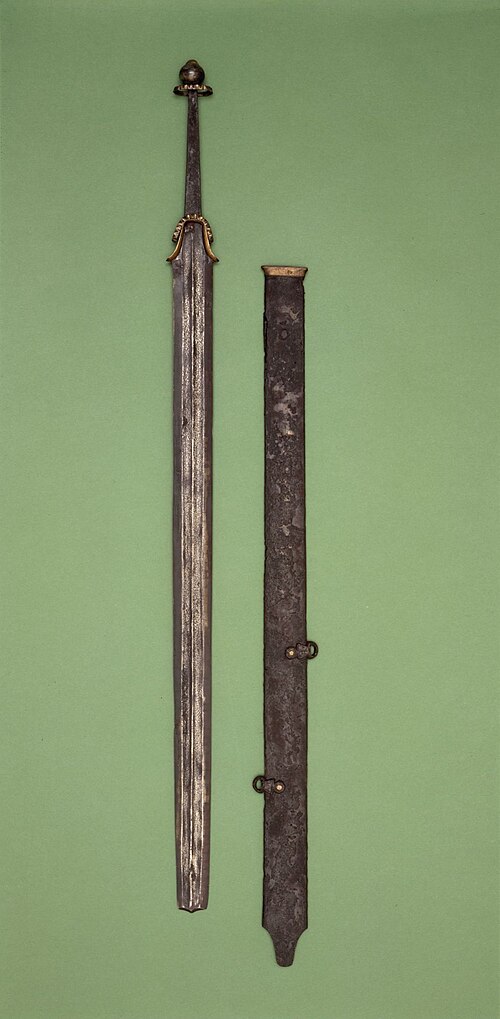
Sword from Lindholmgård, Denmark
Iron Age
Videos
The Iron Age is the final epoch of the three historical Metal Ages, after the Copper Age and Bronze Age. It has also been considered as the final age of the three-age division starting with prehistory
Archaeology of Northern Europe
…Age (5th/4th–1st centuries BC) was the earliest part of the Iron Age in Scandinavia and the North European Plain. Succeeding the Nordic Bronze Age, the Iron Age developed in contact with the Hallstatt culture in Central Europe. Archaeologists first decided to divide the Iron Age of Northern Europe into distinct…

Weapons and fibulae from a Celtic burial site, c. 350 BC.

Willamette Meteorite, the thirteenth largest in the world, is an iron–nickel meteorite found in the USA.

Copy of The Warrior of Hirschlanden (German: Krieger von Hirschlanden), a statue of a nude ithyphallic warrior made of sandstone, the oldest known Iron Age life-size anthropomorphic statue north of the Alps.

Maiden Castle, Dorset, England. More than 2,000 Iron Age hillforts are known in Britain.