Argentine Civil Wars
Videos
The Argentine Civil Wars were a series of civil conflicts of varying intensity that took place from 1814 to 1853 in the territories of Argentina. Beginning concurrently with the Argentine War of Indep
From top left: Battle of Arroyo Grande, execution of Manuel Dorrego, Battle of Pavón, death of Juan Lavalle, murder of Facundo Quiroga, Battle of Caseros, Battle of Famaillá, Battle of Vuelta de Obligado

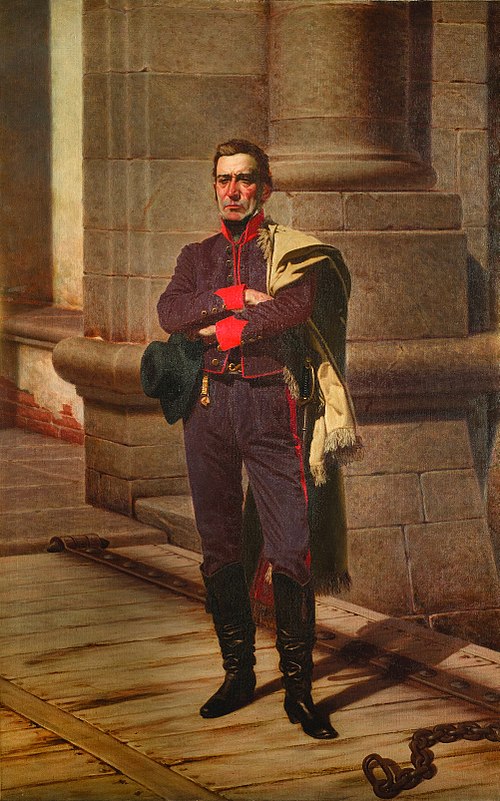
The Banda Oriental, under the liberator José Gervasio Artigas, defended the federal system until all the provinces had equal conditions.

Buenos Aires Governor Juan Manuel de Rosas secured the Confederation under Federalist rule.

A Rosas-era banner calling for "death to the brutal Unitarians" typified the ongoing conflict.
Argentine Confederation
Videos
The Argentine Confederation was the last predecessor state of modern Argentina; its name is still one of the official names of the country according to the Argentine Constitution, Article 35. It was t
Argentine Civil Wars
…commercial control of the Paraná and Uruguay rivers and of Buenos Aires, the country's only port, which saw the secession of Buenos Aires from the Argentine Confederation. Re-unification subsequently became possible with the de-escalation of hostilities that occurred as the battleground moved from armed mutinies to debates…

Battle of Vuelta de Obligado, part of the Anglo-French blockade of the Río de la Plata
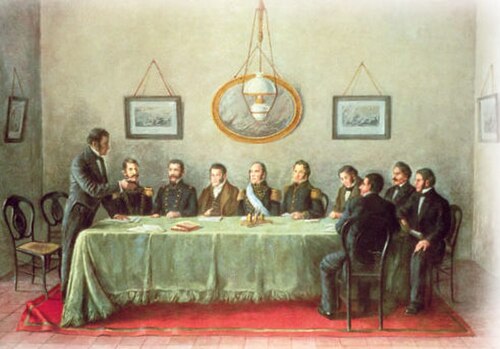
The San Nicolás Agreement led to the sanction of the Argentine Constitution of 1853.