Army of Condé
Videos
The Army of Condé was a French field army during the French Revolutionary Wars. One of several émigré field armies, it was the only one to survive the War of the First Coalition; others had been formed by the Comte d'Artois and Mirabeau-Tonneau. The émigré armies were formed by aristocrats and nobles who had fled from the violence in France after the August Decrees. The army was commanded by Louis Joseph de Bourbon, Prince de Condé, the cousin of Louis XVI of France. Among its members were Condé's grandson, the Duc d'Enghien and the two sons of Louis XVI's younger brother, the Comte d'Artois, and so the army was sometimes also called the Princes' Army.

Battle of Schliengen
Videos
At the Battle of Schliengen, the French Army of the Rhine and Moselle under the command of Jean-Victor Moreau and the Austrian army under the command of Archduke Charles of Austria both claimed victories. The village of Schliengen lies in the present-day Kreis Lörrach close to the border of present-day Baden-Württemberg (Germany), the Haut-Rhin (France), and the Canton of Basel-Stadt (Switzerland).

Present-day view of the battlefield
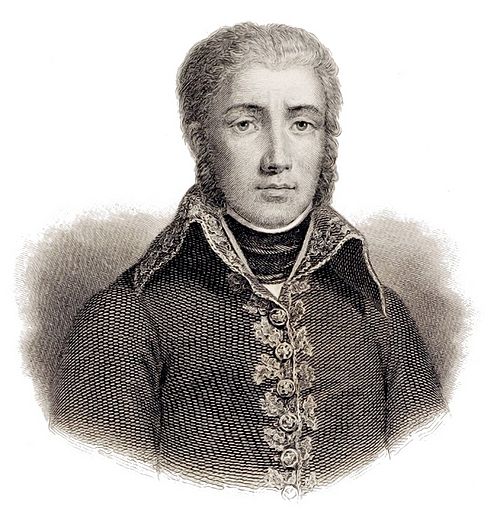
An ardent Republican, Moreau's skillful assault pushed his opponent's army far eastward into the south German states. His and Jourdan's failure to coordinate their movements led to their strategic withdrawal from the German states.

Brother of the Holy Roman Emperor, Archduke Charles held overall command of Habsburg forces in the south German states. By August, he linked his army with Wartensleben's, and was able to push his opponents Jourdan and Moreau back to the Rhine river.

After uniting with Moreau's main army at Freiburg, Ferino withdrew along the High Rhine, to guard the southern flank of Moreau's army. Their united force defended French positions in the southwestern corner of Germany, along the Rhine corridor and eventually covered Moreau's withdrawal to France.