Arsinoe II
Videos
Photos
Arsinoë II was a Ptolemaic queen and co-regent of the Ptolemaic Kingdom of ancient Egypt. She was given the Egyptian title "King of Upper and Lower Egypt", making her pharaoh as well.

Arsinoe II

Arsinoe II, a pottery fragment

Head of Ptolemy II Philadelphus with Arsinoe II behind. The Greek inscription ΑΔΕΛΦΩΝ means "coin of the siblings".

The Gonzaga Cameo in the Hermitage Museum, St. Petersburg; the gem measures 15,7 x 11,8 cm
Ptolemaic dynasty
Videos
Photos
The Ptolemaic dynasty was a Macedonian Greek royal house which ruled the Ptolemaic Kingdom in Ancient Egypt during the Hellenistic period. Reigning for 275 years, the Ptolemaic was the longest and last dynasty of ancient Egypt from 305 BC until its incorporation into the Roman Republic in 30 BC.

A seated woman in a fresco from the Roman Villa Boscoreale, dated mid-1st century BC. It likely represents Berenice II of Ptolemaic Egypt wearing a stephane (i.e. royal diadem) on her head.

Cameo of Ptolemaic rulers (Kunsthistorisches Museum)
The Gonzaga Cameo of Ptolemy II Philadelphus and Arsinoe II from Alexandria (Hermitage Museum)
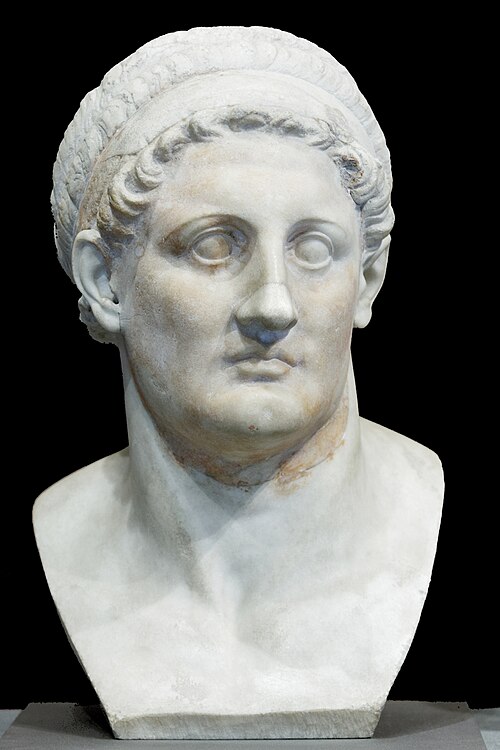
Ptolemy I, founder of the dynasty.