Ashur-bel-kala
Videos
Aššūr-bēl-kala, inscribed maš-šur-EN-ka-la, was the king of Assyria in 1074/3–1056 BC, the 89th to appear on the Assyrian Kinglist. He was the son of Tiglath-Pileser I, succeeded his brother Asharid-a
The only known Assyrian statue of a naked woman, erected at the temple of Ishtar in Nineveh, during the reign of Ashur-bel-kala, 1073–1056 BC. Currently housed in the British Museum, London.

King of the Four Corners
Videos
King of the Four Corners of the World, alternatively translated as King of the Four Quarters of the World, King of the Heaven's Four Corners or King of the Four Corners of the Universe and often short
Ashur-bel-kala
…Ashur-bel-kala King of Assyria King of the Four Corners of the World King of the Middle Assyrian Empire Reign 1074–1056 BC Predecessor Asharid-apal-Ekur Successor Eriba-Adad II Spouse Babylonian princess, daughter of…

Relief with Naram-Sin of Akkad's portrait. Naram-Sin, who reigned between 2254 and 2218 BC, created the title of King of the Four Corners of the World. Relief today housed at the Istanbul Archaeological Museum.

Seal of the Neo-Sumerian king Ibbi-Sin in the Metropolitan Museum of Art. The inscription reads "Ibbi-Sin the strong king, king of Ur, King of the four corners of the world".

"Naram-Sin, King of the four regions (of the World)" 𒀭𒈾𒊏𒄠𒀭𒂗𒍪 𒈗 𒆠𒅁𒊏𒁴 𒅈𒁀𒅎 DNa-ra-am DSîn lugal ki-ibratim arbaim Limestone vase inscription, Girsu, circa 2250 BCE. Louvre Museum AO 74.
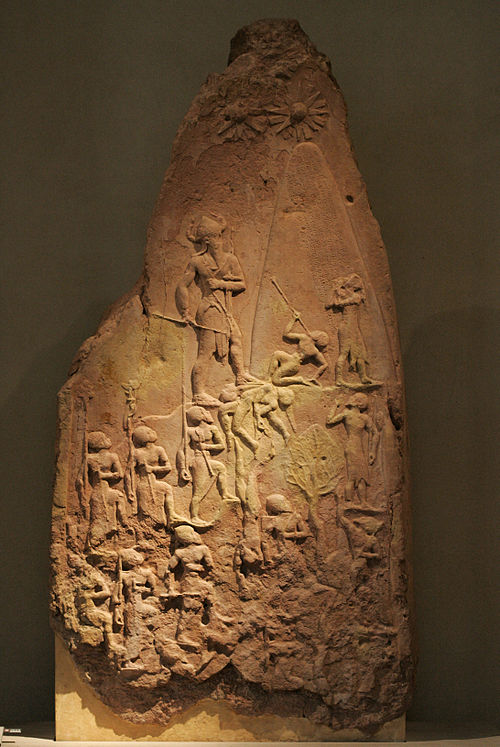
The victory stele of Naram-Sin of Akkad, the first king to claim the title of King of the Four Corners, depicts the king with a horned helmet (symbolizing divinity) and twice as large as his soldiers, standing on a mountain that reaches the heavens. The stele is today housed in the Louvre, Paris.