King of the Four Corners
Videos
King of the Four Corners of the World, alternatively translated as King of the Four Quarters of the World, King of the Heaven's Four Corners or King of the Four Corners of the Universe and often short
Relief with Naram-Sin of Akkad's portrait. Naram-Sin, who reigned between 2254 and 2218 BC, created the title of King of the Four Corners of the World. Relief today housed at the Istanbul Archaeological Museum.


Seal of the Neo-Sumerian king Ibbi-Sin in the Metropolitan Museum of Art. The inscription reads "Ibbi-Sin the strong king, king of Ur, King of the four corners of the world".

"Naram-Sin, King of the four regions (of the World)" 𒀭𒈾𒊏𒄠𒀭𒂗𒍪 𒈗 𒆠𒅁𒊏𒁴 𒅈𒁀𒅎 DNa-ra-am DSîn lugal ki-ibratim arbaim Limestone vase inscription, Girsu, circa 2250 BCE. Louvre Museum AO 74.
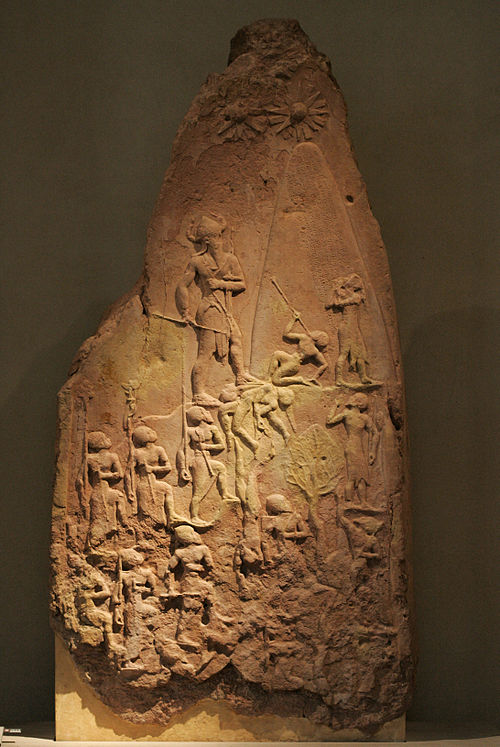
The victory stele of Naram-Sin of Akkad, the first king to claim the title of King of the Four Corners, depicts the king with a horned helmet (symbolizing divinity) and twice as large as his soldiers, standing on a mountain that reaches the heavens. The stele is today housed in the Louvre, Paris.
Cyrus the Great
Videos
Cyrus II of Persia, commonly known as Cyrus the Great, was the founder of the Achaemenid Empire. Hailing from Persis, he brought the Achaemenid dynasty to power by defeating the Median Empire and embr
King of the Four Corners
…Assyrian rulers, becoming especially prominent during the Neo-Assyrian Empire. The final ruler to claim the title was the first Persian Achaemenid king, Cyrus the Great, after his conquest of Babylon in 539 BC. It is possible, at least among Assyrian rulers, that the title of King of the Four Corners was not inherited…

Winged genie relief at Pasargadae, with braided hair and a Hemhem crown, which an old theory identified as Cyrus

The four-winged guardian figure that may depict Cyrus, known from a bas-relief on a doorway pillar from Pasargadae. An inscription says "I am Cyrus the King, an Achaemenian." Scholars doubting that it depicts Cyrus note the inscription was inscribed in a later period and that the same inscription is found on other palaces in the complex.

"I am Cyrus the King, an Achaemenian" in Old Persian, Elamite and Akkadian languages. It is known as the "CMa inscription", carved in a column of Palace P in Pasargadae. These inscriptions on behalf of Cyrus were probably made later by Darius I in order to affirm his lineage, using the Old Persian script he had designed.

Painting by Jean-Charles Nicaise Perrin of king Astyages sending Harpagus to kill young Cyrus