Asterism (astronomy)
Videos
An asterism is an observed pattern or group of stars in the sky. Asterisms can be any identified star pattern, and therefore are a more general concept than the 88 formally defined constellations. Con

The bright stars in this photo form the asterism Brocchi's Cluster in the constellation Vulpecula, also known as "The Coathanger."

Three Leaps of the Gazelle asterism

The "Teapot" asterism in Sagittarius. The Milky Way appears as "steam" coming from the spout.

The "37" or "LE" of NGC 2169, in Orion. It is visible with binoculars.
Constellation
Videos
A constellation is an area on the celestial sphere in which a group of visible stars forms a perceived pattern or outline, typically representing an animal, mythological subject, or inanimate object.
Asterism (astronomy)
…pattern or group of stars in the sky. Asterisms can be any identified star pattern, and therefore are a more general concept than the 88 formally defined constellations. Constellations are based upon asterisms, but unlike asterisms, constellations are defined regions with official boundaries which together encompass…
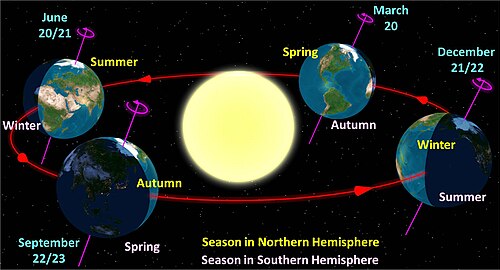
The relationship of the Earth's tilt to the Sun's apparent path governs how the zodiac will be orientated overnight.

Babylonian tablet recording Halley's Comet in 164 BC
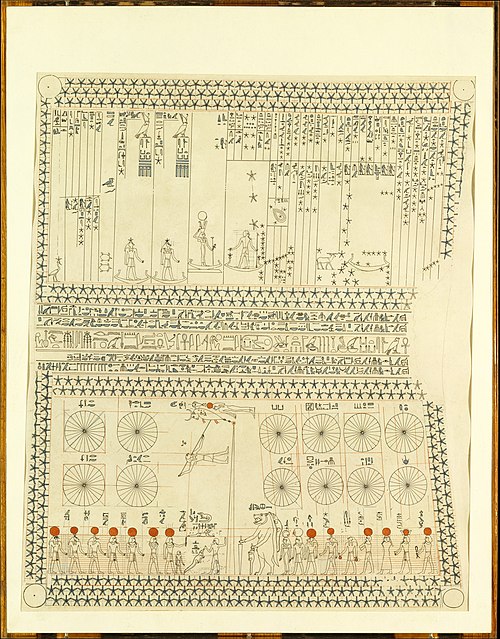
Egyptian star chart and decanal clock, from the ceiling of Senenmut's tomb, c. 1473 BC

The Milky Way as seen from Earth, with prominent dark features labeled in white, as well as prominent star clouds labeled in black. Below center left are the Large and Small Magellanic Clouds. The star-like objects are globular clusters of the Milky Way.