Atahualpa
Videos
Atawallpa, also Atahualpa or Ataw Wallpa, whose regnal name was Caccha Pachacuti Inca Yupanqui Inca, was the last effective Inca emperor, reigning from April 1532 until his capture and execution in Ju
Atabalipa, King of Peru, 17th-century oil painting at the MuNa, Quito


"The execution of Atahualpa Inca in Cajamarca: they behead him", drawn in 1615 by the chronicler Guaman Poma

The bastard tyrant, Atahualpa, 18th-century painting by the Cuzco School (Brooklyn Museum)

The Inca coming to meet Pizarro
Inca Empire
Videos
The Inca Empire, officially known as the Realm of the Four Parts, was the largest empire in pre-Columbian America. The administrative, political, and military center of the empire was in the city of C
Atahualpa
…Portrait of Atawallpa by an unknown artist from the Cuzco School. Currently located in the Ethnological Museum of Berlin, Germany. Sapa Inca of the Inca Empire Reign 1532 – 1533 Self-installation April 1532 Predecessor Huáscar Successor Túpac Huallpa (as puppet Sapa Inca of the Inca Empire) Born c. 1502 Quito…

Stela in Tiwanaku's Kalasasaya temple
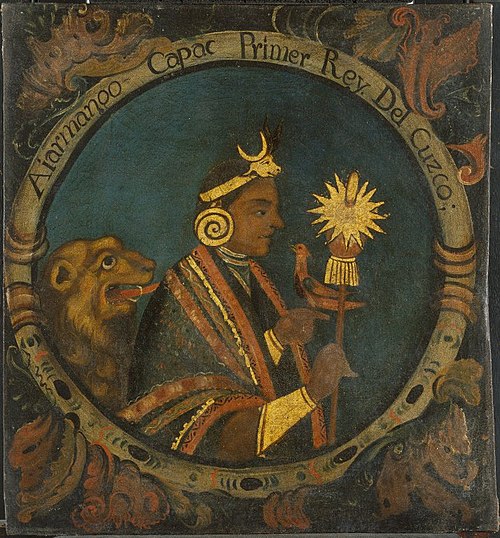
Manco Capac, First Inca, 1 of 14 Portraits of Inca Kings, Probably mid-18th century. Oil on canvas. Brooklyn Museum

The first image of the Inca in Europe, Pedro Cieza de León, Crónica del Perú, 1553

Capaccona or Qhapaqkuna "the kings", a 17th-century Cusco painting with the Inca lineages mentioned by colonial chronicles and their relationship with the royal queens of Cuzco, which hide behind a complex representation of the Inca social organization.