Atmosphere of Mars
Videos
The atmosphere of Mars is primarily composed of carbon dioxide, molecular nitrogen, and argon. It also contains trace levels of water vapor, oxygen, carbon monoxide, hydrogen, and noble gases. The atm

Mars's escaping atmosphere—carbon, oxygen, hydrogen—measured by MAVEN's UV spectrograph).

Seasonal variations of oxygen at Gale crater

Clouds observed by NASA's Curiosity rover

Seasonal variations in oxygen and methane at Gale crater
Mars
Videos
Mars is the fourth planet from the Sun. It is also known as the "Red Planet", for its orange-red appearance. Mars is a desert-like rocky planet with a tenuous atmosphere that is primarily carbon dioxi
Atmosphere of Mars
…The atmosphere of Mars is primarily composed of carbon dioxide (95%), molecular nitrogen (2.85%), and argon (2%). It also contains trace levels of water vapor, oxygen, carbon…
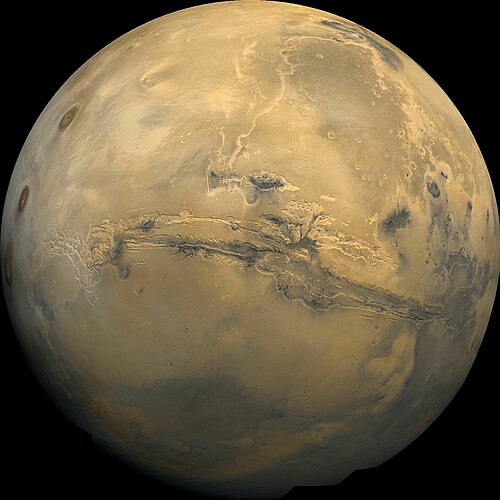
Valles Marineris, taken by the Viking 1 probe

Artist concept showing sand-laden jets erupting from Martian geysers (published by NASA; artist: Ron Miller)

A 30 meter wide and 800 meter high dust devil. Dust devils of 20 kilometer height have been observed.
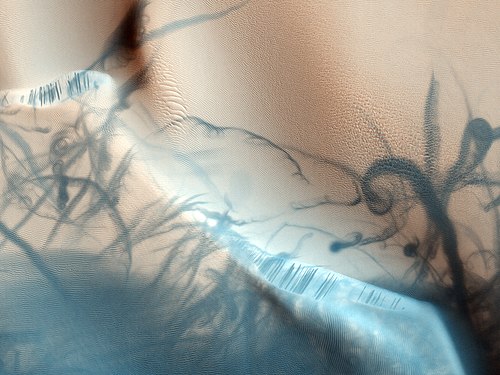
Dust devils cause twisting dark trails on the Martian surface