Atra-Hasis
Videos
Atra-Hasis is an 18th-century BC Akkadian epic, recorded in various versions on clay tablets and named for one of its protagonists, the priest Atra-Hasis. The narrative has its origins in Sumerian his
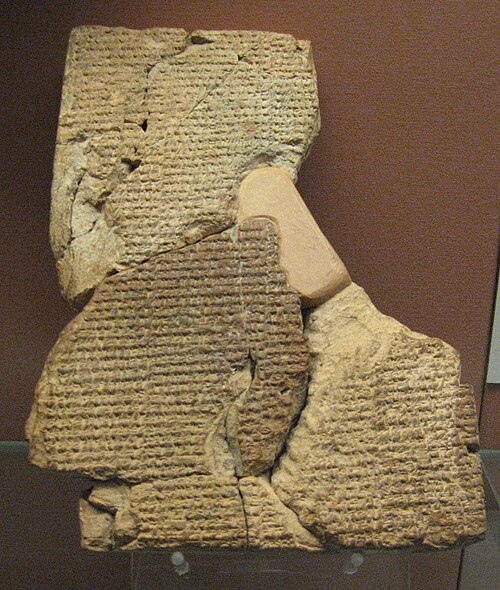
One of the damaged tablets that preserve the epic in cuneiform script, exhibited here in the British Museum. The reconstruction of the narrative was carried out by comparing of documents, which contain the same epic - at the very least parts influenced by it - in more or less varied forms.
Epic of Gilgamesh
Videos
The Epic of Gilgamesh is an epic from ancient Mesopotamia that is the world's oldest surviving example of narrative literature. The literary history of Gilgamesh begins with five Sumerian poems about
Atra-Hasis
…obeyed. After 9 months, the land of the gods gave birth to its first human child, whose purpose in life was to be the same as that of his parents. (* Cf. Gilgamesh epic: there, too, the gods arranged a seven-day sexual act to pacify a kind of cold war. Protagonists are Enkidu: an almost invincible, rebellious animal-man…
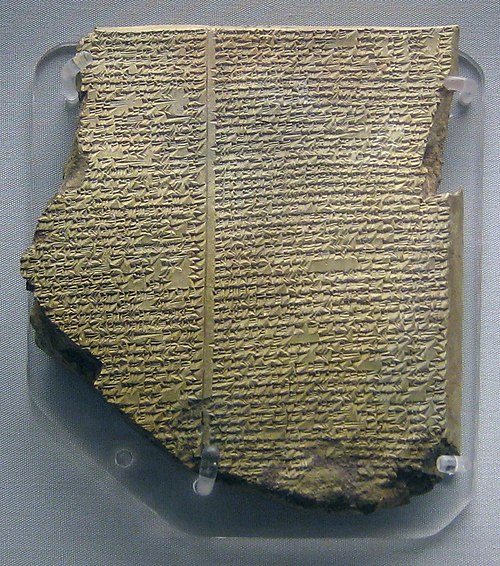
The Deluge tablet of the Gilgamesh epic in Akkadian

Ancient Assyrian statue currently in the Louvre, possibly representing Gilgamesh

Enkidu, Gilgamesh's friend. From Ur, Iraq, 2027–1763 BC, Iraq Museum

The Gilgamesh Dream tablet. From Iraq. Middle Babylonian Period, First Sealand Dynasty, 1732–1460 BCE. Iraq Museum, Baghdad. This dream tablet recounts a part of the epic of Gilgamesh in which the hero (Gilgamesh) describes his dreams to his mother (the goddess Ninsun), who interprets them as announcing the arrival of a new friend, who will become his companion.