Augustus
Videos
Augustus, also known as Octavian, was the founder of the Roman Empire and the first Roman emperor from 27 BC until his death in AD 14. The reign of Augustus initiated an imperial cult and an era of im
The Augustus of Prima Porta


An idealized Roman sculpted portrait of Octavius as a teenager, possibly produced posthumously or when he was much older, now located in the Vatican Museums

The Death of Caesar by Vincenzo Camuccini, 1805, Galleria Nazionale d'Arte Moderna, Rome
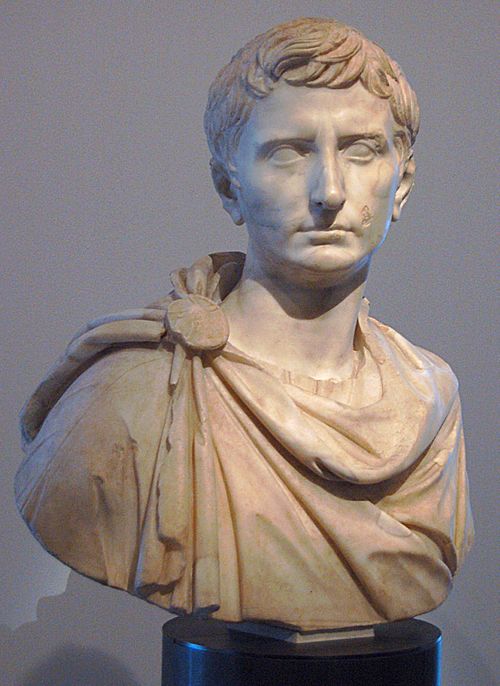
Bust of Octavian, c. 30 BC. Capitoline Museums, Rome
Livia
Videos
Livia Drusilla was Roman empress from 27 BC to AD 14 as the wife of Augustus, the first Roman emperor. She was known as Julia Augusta after her formal adoption into the Julia gens in AD 14.
Augustus
…ancient to modern times. He died in AD 14 at age 75 from natural causes, and the Senate posthumously deified him. Persistent rumors have claimed his wife Livia poisoned him. He was succeeded as emperor by his stepson and adoptive son Tiberius. Augustus ( aw-GUST-əs) was known by many names throughout his life…

Bust, Musée Saint-Raymond

Bust of Augustus, National Archaeological Museum of the Marche Region

Bust of Livia, Hermitage Museum

Sculpture of Livia in Egyptian basanite, c. 31 BC, Louvre, Paris