Aurangzeb
Videos
Alamgir I, commonly known by the title Aurangzeb, was the sixth Mughal emperor, reigning from 1658 until his death in 1707. Under his reign, the Mughal Empire reached its greatest extent, with territo
Darbar of Aurangzeb by Bichitr, c. 1660


Shah Jahan holding Aurangzeb in his lap, c. 1620

Young Prince Aurangzeb (far left), aged 9–10, with his brothers Dara Shikoh, Shah Shuja, their father Shah Jahan (centre), and maternal grandfather Asaf Khan IV (right) c. 1628

Shah Jahan (left) and Aurangzeb (right), c. 1659
Bahadur Shah I
Videos
Bahadur Shah I or Shah Alam I, was the eighth Mughal emperor from 1707 to 1712. He was the second son of the sixth Mughal emperor Aurangzeb, who he conspired to overthrow in his youth. He was also the
Aurangzeb
…forts. Sambhaji was also restored as a Mughal mansabdar with 5,000 horses. At that time Shivaji sent Sambhaji and General Prataprao Gujar, to serve with Prince Mu'azzam, the Mughal viceroy in Aurangabad. Sambhaji was also granted territory in Berar for revenue collection. Aurangzeb also permitted Shivaji to attack…

Bahadur Shah I c. 1691
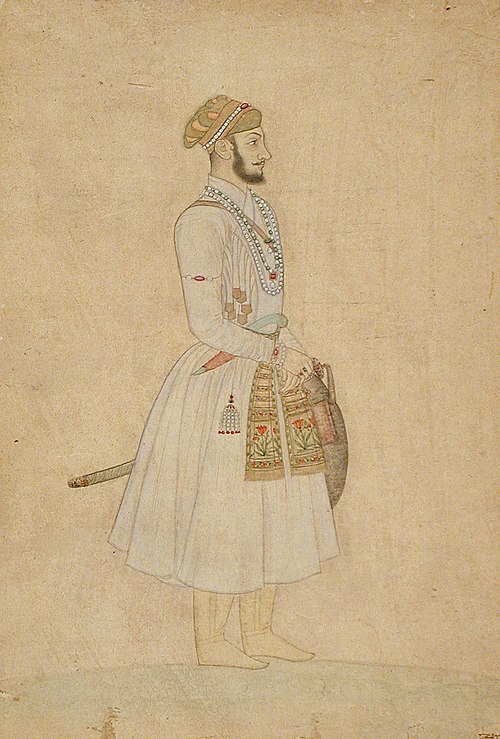
Prince Mu'azzam in his youth
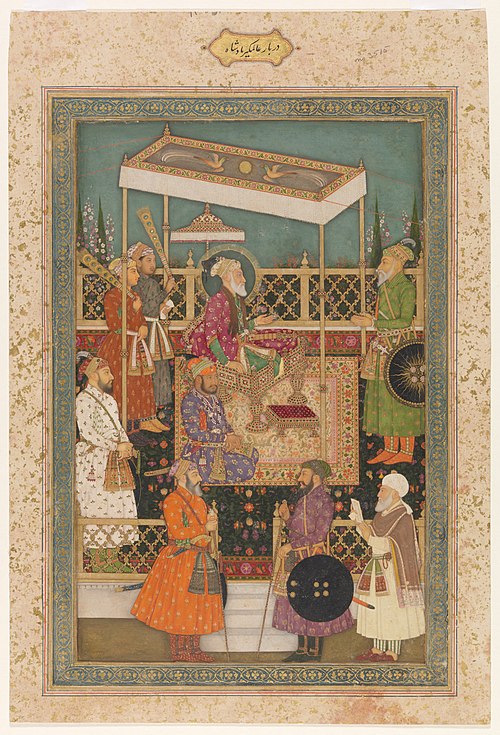
Emperor Aurangzeb Receives Prince Mu'azzam. Chester Beatty Library

Silver Rupee of Mughal emperor Bahadur Shah I, struck in Burhanpur Mint.