Ayyubid dynasty
Videos
The Ayyubid dynasty, also known as the Ayyubid Sultanate, was a Sunni Muslim dynasty of Kurdish origin that founded the medieval Sultanate of Egypt, which was established by Saladin in 1171, following
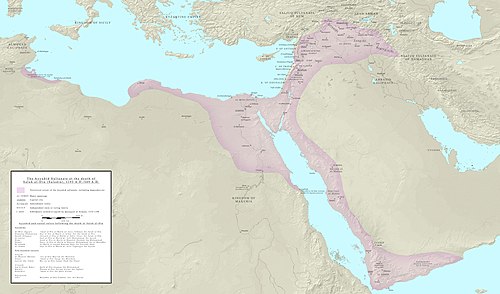
Ayyubid Sultanate of Egypt (in pink) at the death of Saladin in 1193

A dirham in the name of Saladin, dated 587 AH (1190/91 CE). Saladin is shown wearing the Seljuk Turk sharbush hat, his rallying sign. Legend "The Victorious King, Righteousness of the World and the Faith, Yusuf ibn Ayyub".

Fatimid or Ayyubid dynasty battle scene, Fustat, Cairo, Egypt, 12–13th century.

Arabic trebuchet, with its counterweight, in the Tabṣira by Murḍi Ibn cālī Ibn Murḍi al-Ṭarsūsī written for Saladin, late Fāṭimid or early Ayyūbid Egypt, c.1170 CE (Ms. Hunt.264, f.117, Bodleian Library, Oxford, UK). This is the only manuscript directly attributable to the Ayyubids, although early manuscripts such as the Kalīla wa-Dimna (BNF Arabe 3465) are also generally considered as Ayyubid.
Kingdom of Jerusalem
Videos
The Kingdom of Jerusalem, also known as the Crusader Kingdom, was one of the Crusader states established in the Levant immediately after the First Crusade. It lasted for almost 200 years, from the acc
Ayyubid dynasty
…Saladin led a force of some 26,000 soldiers, according to Crusader chronicler William of Tyre, into southern Palestine after hearing that most of the Kingdom of Jerusalem's soldiers were besieging Harem, Syria west of Aleppo. Suddenly attacked by the Templars under Baldwin IV of Jerusalem near Ramla, the Ayyubid army was…

After the successful siege of Jerusalem in 1099, Godfrey of Bouillon, leader of the First Crusade, became the first ruler of the Kingdom of Jerusalem.

The funeral of Baldwin I from the book Les Passages d'outremer faits par les Français contre les Turcs depuis Charlemagne jusqu'en 1462.

Depiction of Crusaders from a 1922 edition of Petit Larousse

The Tower of David in Jerusalem as it appears today