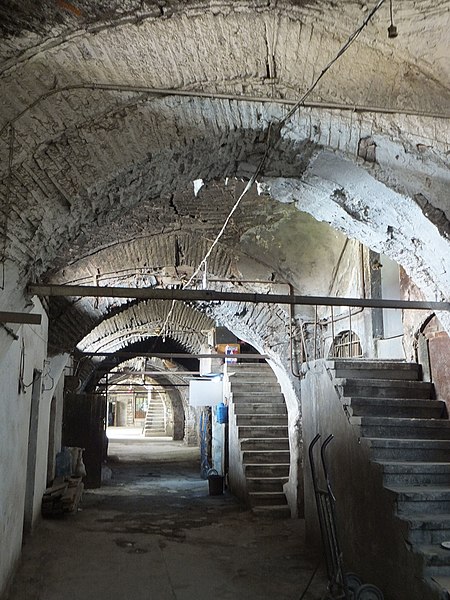
The Büyük Valide Han is the largest historic han (caravanserai) in Istanbul, Turkey. It was founded in 1651 by Kösem Valide Sultan, the mother of the Ottoman sultans Murat IV and Ibrahim.
The entrance of the han
View of the main courtyard; many later add-on structures are visible over the original building
One of the domes over on the upper floor gallery around the main courtyard
View of the corridor on the upper floor gallery
A caravanserai was a roadside inn where travelers (caravaners) could rest and recover from the day's journey. Caravanserais supported the flow of commerce, information and people across the network of trade routes covering Asia, North Africa and Southeast Europe, most notably the Silk Road. Often located along rural roads in the countryside, urban versions of caravanserais were also historically common in cities throughout the Islamic world, and were often called other names such as khan, wikala, or funduq.
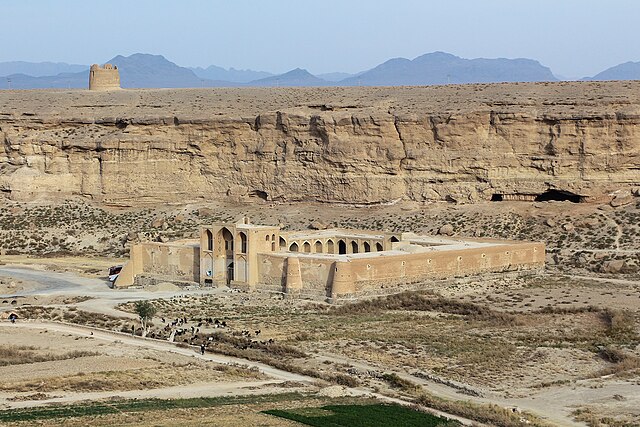
The Izadkhast caravanserai (early 17th century), Fars Province, Iran
The Ganjali Khan Caravanserai (1598), in Kerman, Iran
Khan As'ad Pasha, a caravanserai built in 1752 in Damascus, Syria
Funduq al-Najjarin in Fes, Morocco