The baro’t saya or baro at saya is a traditional dress ensemble worn by women in the Philippines. It is a national dress of the Philippines and combines elements from both the precolonial native Filipino and colonial Spanish clothing styles. It traditionally consists of four parts: a blouse, a long skirt, a kerchief worn over the shoulders, and a short rectangular cloth worn over the skirt.
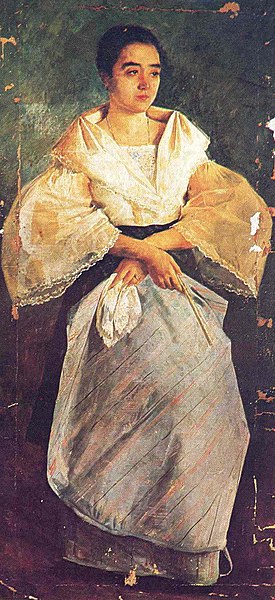
La Bulaqueña, an 1895 painting by Juan Luna of an upper class woman from Bulacan wearing a traje de mestiza. The painting is sometimes referred to as the "María Clara" due to the woman's dress.
Mestizos de Manila by Juan Ravenet showing the checkered narrow pares saya of native women in the 18th century Philippines. Also note the European-style clothing of the men. (c.1792-1794)
Filipina, a 19th-century painting of a working-class woman in baro't saya by Fabián de la Rosa
19th-century camisa from the Metropolitan Museum of Art
Fashion and clothing in the Philippines
Fashion and clothing in the Philippines refers to the way the people of the Philippine society generally dress up at home, at work, travelling and during special occasions.
A Philippine lady, 1897
1890s woman wearing the Maria Clara dress
Attire of a young woman
Filipino women's fashion, 1700s – 1840s