Baron Braose
Videos
The title of Baron Braose was created twice in the Peerage of England. Some records from the period of the second creation spell the name Brewose.

Funerary monument to Thomas de Braose, 3rd Baron Braose (1352–1395) (Baron of the 2nd creation), dressed in full armour, his head resting on a helm. The tomb chest is decorated with quatrefoils and heraldic escutcheons showing the lion rampant Braose arms impaling the arms of various heiresses. South wall of sanctuary, St Mary's Church, Horsham, West Sussex. Drawing by Samuel Hieronymus Grimm, 1781.
Lion (heraldry)
Videos
The lion is a common charge in heraldry. It traditionally symbolises courage, nobility, royalty, strength, stateliness and valour, because historically the lion has been regarded as the "king of beast
A Lion of Saint Mark, from the Echternach Gospels (late 7th century).

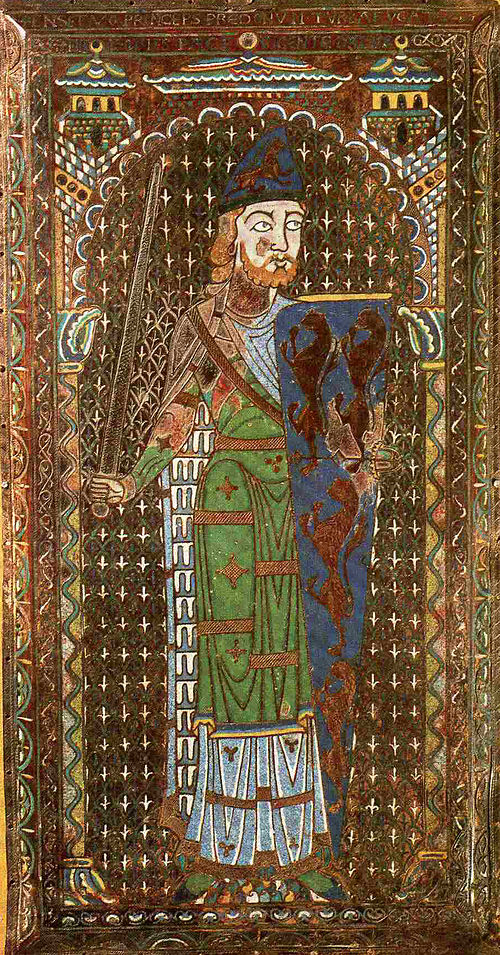
Enamel from the tomb of Geoffrey Plantagenet, Count of Anjou (c. 1160).

The shield of Conrad of Thuringia (c. 1230s), a rare example of a preserved 13th-century knightly shield, displaying the Ludovingian lion barry.

The coat of arms of the Landgrave of Hesse in the Wernigerode Armorial (late 15th century), shown as combining the lions of Hesse, Katzenelnbogen and Diez)