Battle of Baghdad (2003)
Videos
The Battle of Baghdad, also known as the Fall of Baghdad, was a military engagement that took place in Baghdad in early April 2003, as part of the invasion of Iraq.
Statue of Saddam Hussein being toppled in Firdos Square


A T-72 Asad Babil (Lion of Babylon) battle tank abandoned after facing the final US attack into Baghdad

A Marine Corps M1 Abrams tank patrols a Baghdad street after its fall in 2003 during Operation Iraqi Freedom.

Black Hawk helicopters from 5th Battalion, 101st Combat Aviation Brigade, 101st Airborne Division (Air Assault) move into an Iraqi city during an operation to occupy the city, April 5.
On 9 April 2003, during the U.S. invasion of Iraq, a large statue of Saddam Hussein in Baghdad's Firdos Square was destroyed by Iraqi civilians and United States Marines. The event received global med
Battle of Baghdad (2003)
…Battle of Baghdad (2003) Part of the invasion of Iraq Statue of Saddam Hussein being toppled in Firdos Square Date April 3–9, 2003 (6 days) Location Baghdad, Iraq Result Coalition victory Occupation of Baghdad by coalition forces Saddam Hussein…
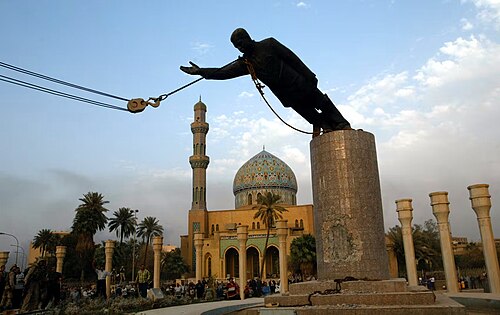
The toppling of Saddam Hussein's statue in Firdos Square in Baghdad shortly after the invasion of Iraq in 2003

The face of the statue being covered by the American flag

Saddam Hussein at trial, July 2004