Battle of the Aegates
Videos
The Battle of the Aegates was a naval battle fought on 10 March 241 BC between the fleets of Carthage and Rome during the First Punic War. It took place among the Aegates Islands, off the western coas

A Roman coin from 109 BC alluding to Catalus's victory; it shows a galley within a wreath of oak leaves.

Remains of the Temple of Juturna at Largo di Torre Argentina, built by Gaius Lutatius Catulus to celebrate his victory

A Carthaginian naval ram recovered from the site of the battle showing damage in the form of V-shaped scratches, attributed to frontal collision(s) with a Roman ship – ram against ram
First Punic War
Videos
The First Punic War was the first of three wars fought between Rome and Carthage, the two main powers of the western Mediterranean in the early 3rd century BC. For 23 years, in the longest continuous
Battle of the Aegates
…The Battle of the Aegates was a naval battle fought on 10 March 241 BC between the fleets of Carthage and Rome during the First Punic War. It took place among the Aegates Islands, off the western coast of the island of Sicily. The Carthaginians were commanded by Hanno, and the Romans were…

Polybius, ancient Greek historian
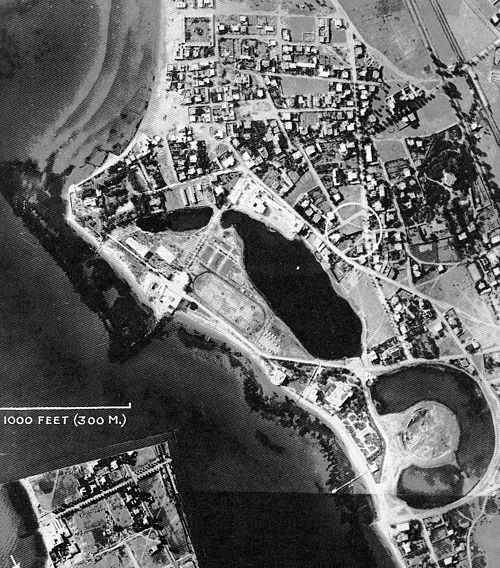
An aerial photograph of the remains of the naval base of the city of Carthage. The remains of the mercantile harbour are in the centre and those of the military harbour are bottom right. Before the war Carthage had the most powerful navy in the western Mediterranean.

Detail from the Ahenobarbus relief showing two Roman foot-soldiers from the second century BC

Continued Roman advance 260–256 BC