Battle of the Ancre
Videos
The Battle of the Ancre, was fought by the British Fifth Army, against the German 1st Army. The Reserve Army had been renamed the Fifth Army on 30 October. The battle was the last of the big British a

Field kitchen of the 2nd Battalion, Manchester Regiment near St Pierre Divion, November 1916

Water refilling point on the Ancre at the causeway of Mill Road, November 1916 Q4578

A Padre helping a wounded German prisoner along (13 November 1916, near Aveluy Wood) Q4505

British cavalry on the Ancre
Battle of the Somme
Videos
The Battle of the Somme, also known as the Somme offensive, was a battle of the First World War fought by the armies of the British Empire and the French Republic against the German Empire. It took pl
Battle of the Ancre
…General Fritz von Below). The Reserve Army had been renamed the Fifth Army on 30 October. The battle was the last of the big British attacks of the Battle of the Somme. After the Battle of Flers–Courcelette (15–22 September) the Anglo-French armies tried to press their advantage with smaller attacks in quick succession…

The Western Front (January 1915 – December 1916)

Troops of the British Indian Army at Battle of the Somme.

Men of the 10th (Service) Battalion, East Yorkshire Regiment of the 31st Division marching to the front line, 28 June 1916.
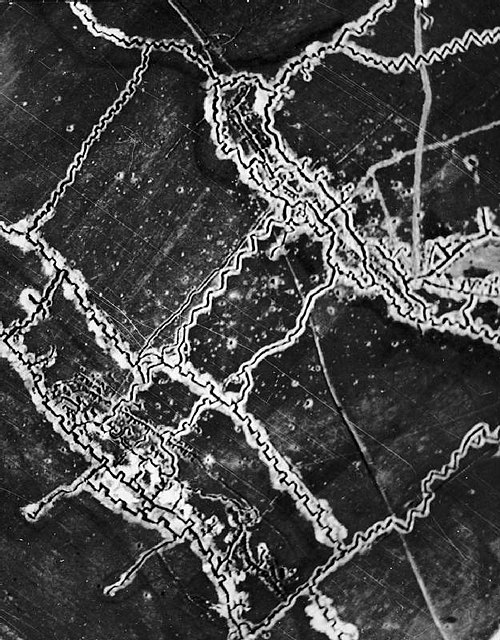
British aerial photograph of German trenches north of Thiepval, 10 May 1916, with the German forward lines to the lower left. The crenellated appearance of the trenches is due to the presence of traverses.