Beelzebub
Videos
Ba'al Zabub, Ba'al Zvuv or Beelzebub, also spelled Beelzebul or Belzebuth, and occasionally known as the Lord of the Flies, is a name derived from a Philistine god, formerly worshipped in Ekron, and l
"Beelzebub and them that are with him shoot arrows" from John Bunyan's The Pilgrim's Progress (1678)


Beelzebub as a character in the mumming play St George and the Dragon by the St Albans Mummers, 2015

Satan and Beelzebub, the captains of Hell in Paradise Lost by John Milton

Man being attacked by devils and demons
Baal
Videos
Baal, or Ba'al, was a title and honorific meaning "owner" or "lord" in the Northwest Semitic languages spoken in the Levant during antiquity. From its use among people, it came to be applied to gods.
Beelzebub
…formerly worshipped in Ekron, and later adopted by some Abrahamic religions as a major demon. The name Beelzebub is associated with the Canaanite god Baal. Beelzebub is known in demonology as one of the seven deadly demons or seven princes of Hell, Beelzebub representing gluttony and envy. The Dictionnaire…
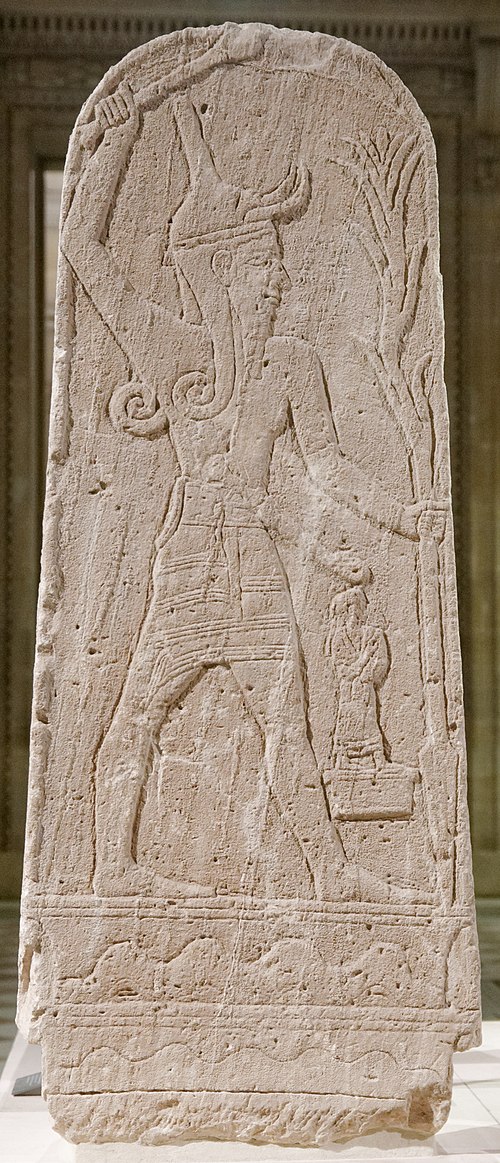
Baal with Thunderbolt stele from Ugarit (Musée du Louvre, Paris)

Bronze figurine of Baal, 14th–12th century BC, found at Ras Shamra (ancient Ugarit) near the Phoenician coast (Musée du Louvre, Paris)

Solid cast bronze of a votive figurine representing Baal discovered at Tel Megiddo, dating to the mid-2nd millennium BC (Institute for the Study of Ancient Cultures, Chicago, Illinois)