Beheading game
Videos
The beheading game is a literary trope found in Irish mythology and medieval chivalric romance. The trope consists of a stranger who arrives at a royal court and challenges a hero to an exchange of bl
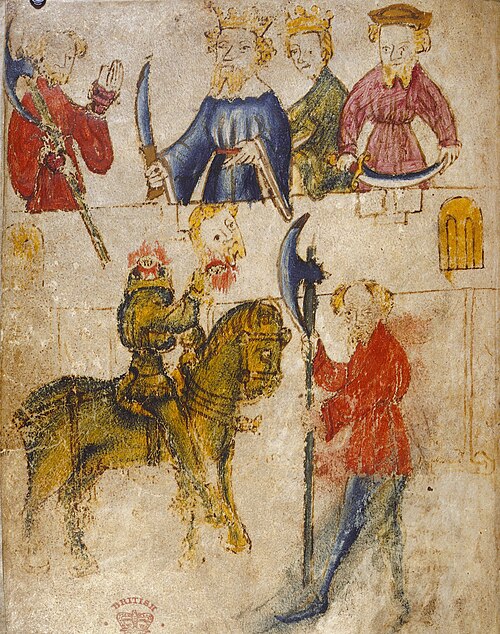
The Green Knight has survived beheading by Gawain and carries his own head in this 14th-century manuscript.

In the Fled Bricrenn, Cú Chulainn (pictured) takes part in a beheading game to earn the Champion's Portion.

Chrétien de Troyes was the first to incorporate the beheading game into the Matter of Britain.

By taking the magic girdle from Lady Bertilak, Gawain fails to uphold the virtues of Camelot.
Green Knight
Videos
The Green Knight is a heroic character of the Matter of Britain, originating in the 14th-century poem Sir Gawain and the Green Knight and the related medieval work The Greene Knight. His true name is
Beheading game
…The version of the game found in the latter work has been analyzed for its relationship with the Arthurian concept of chivalry. At no point does the Green Knight specify that he must be beheaded, only that he will return whatever blow is struck. When Gawain makes the impulsive decision to decapitate the Knight…
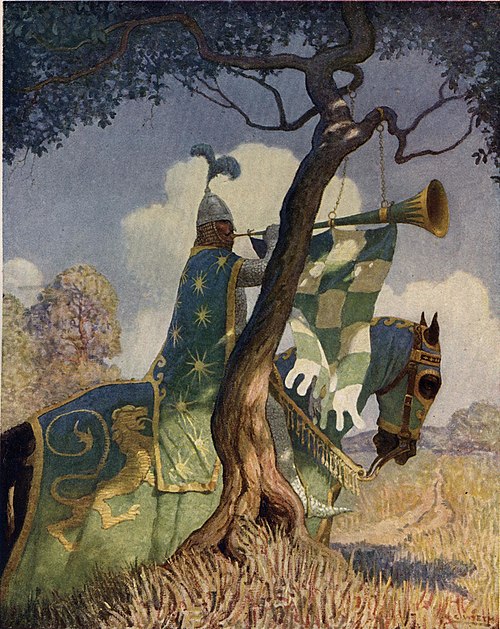
The Green Knight preparing to battle Sir Beaumains in N. C. Wyeth's illustration for Sidney Lanier's The Boy's King Arthur: Sir Thomas Malory's History of King Arthur and His Knights of the Round Table (1922)

Michael Pacher's painting of a green Devil with Saint Augustine in 1475. Poetic contemporaries such as Chaucer also made associations between the colour green and the devil, causing scholars to make similar associations in readings of the Green Knight.