Belet Nagar
Videos
Belet Nagar was the tutelary goddess of the ancient Syrian city Nagar. She was also worshiped by the Hurrians and in Mesopotamia. She was connected with kingship, but much about her role in the religi
A so-called "eye idol" from Tell Brak (ancient Nagar), possibly connected to a deity who was the forerunner of Belet Nagar.


Nabarbi (first from the right) next to Išḫara and Allani on the Yazılıkaya reliefs
Kumarbi
Videos
Kumarbi, also known as Kumurwe, Kumarwi and Kumarma, was a Hurrian god. He held a senior position in the Hurrian pantheon, and was described as the "father of gods". He was portrayed as an old, depose

A copy of inscription of Tiš-atal on a foundation peg from Urkesh. Louvre.

The Muwatalli II-Alaksandu treaty, which mentions Kumarbi among the divine witnesses. Troy Museum.

A possible representation of scenes from the Song of Ullikummi on the golden bowl of Hasanlu
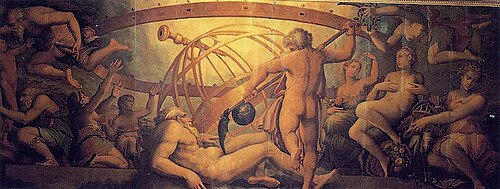
A 16th century painting by Giorgio Vasari and Cristoforo Gherardi showing the castration of Ouranos, a Greek myth possibly influenced by the Kumarbi Cycle.