Benthic zone
Videos
The benthic zone, from Ancient Greek βένθος 'the depths of the ocean', is the ecological region at the lowest level of a body of water, such as a stream, river, lake, or ocean, including the sediment
Benthos (organisms that live at the ocean floor) can be contrasted with neuston (organisms that live at the ocean surface) plankton (organisms that drift with water currents) and nekton (organisms that can swim against water currents)


Photomicrograph of typical benthic animals, including (from top to bottom) amphipods, a polychaete worm, a snail, and a chironomous midge larva

Seagrass

Echinoderms
Pelagic zone
Videos
The pelagic zone consists of the water column of the open ocean and can be further divided into regions by depth. The word pelagic is derived from Ancient Greek πέλαγος 'open sea'. The pelagic zone ca
Benthic zone
…ft) deep. The ocean floor is not all flat but has submarine ridges, seamounts and deep ocean trenches known as the hadal zone. For comparison, the pelagic zone is the ecological region above the benthos, comprising the water column up to the surface. The benthos of the deep ocean includes the bottom levels of…
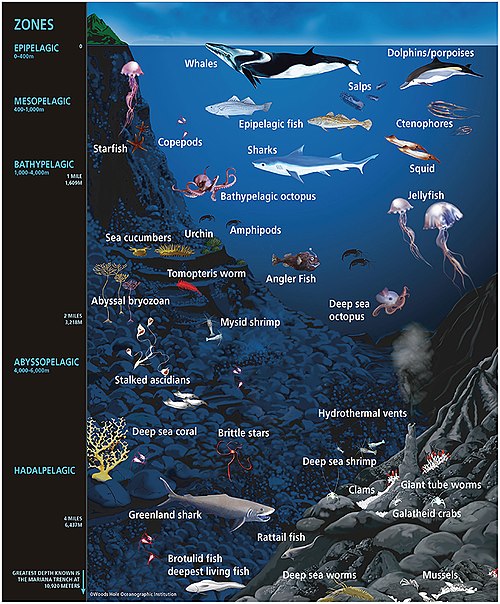
Some representative ocean animals (not drawn to scale) within their approximate depth-defined ecological habitats. Marine microorganisms also exist on the surfaces and within the tissues and organs of the diverse life inhabiting the ocean, across all ocean habitats. The animals rooted to or living on the ocean floor are not pelagic but are benthic animals.

The yellow bellied sea snake as it glides across the surface of the ocean.
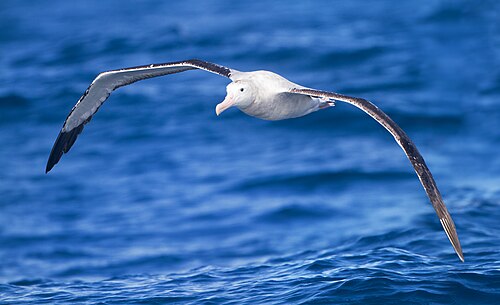
The pelagic wandering albatross (Diomedea exulans) ranges over huge areas of ocean and can circle the globe.

Pelagic food web