Pelagic zone
Videos
The pelagic zone consists of the water column of the open ocean and can be further divided into regions by depth. The word pelagic is derived from Ancient Greek πέλαγος 'open sea'. The pelagic zone ca
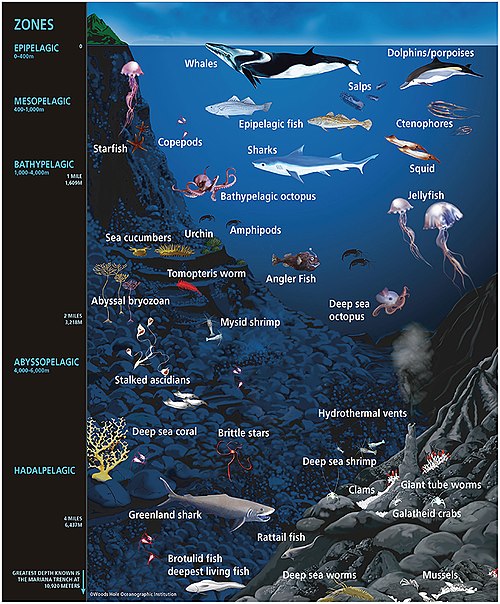
Some representative ocean animals (not drawn to scale) within their approximate depth-defined ecological habitats. Marine microorganisms also exist on the surfaces and within the tissues and organs of the diverse life inhabiting the ocean, across all ocean habitats. The animals rooted to or living on the ocean floor are not pelagic but are benthic animals.

The yellow bellied sea snake as it glides across the surface of the ocean.
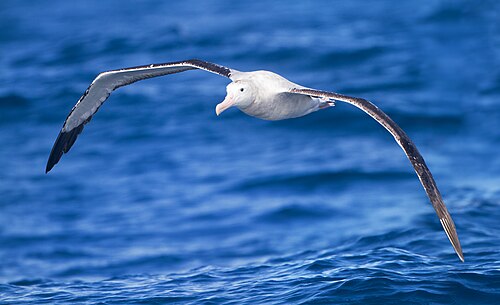
The pelagic wandering albatross (Diomedea exulans) ranges over huge areas of ocean and can circle the globe.

Pelagic food web
Photic zone
Videos
The photic zone is the uppermost layer of a body of water that receives sunlight, allowing phytoplankton to perform photosynthesis. It undergoes a series of physical, chemical, and biological processe
Pelagic zone
…is derived from Ancient Greek πέλαγος (pélagos) 'open sea'. The pelagic zone can be thought of as an imaginary cylinder or water column between the surface of the sea and the bottom. Conditions in the water column change with depth: pressure increases; temperature and light decrease; salinity, oxygen, micronutrients…

Comparison of the depths which different colors of light penetrate open ocean waters and the murkier coastal waters. Water absorbs the warmer long wavelengths colours, like reds and oranges, and scatter the cooler short wavelength colours.

Intricate silicate (glass) shell, 32–40 million years old, of a diatom microfossil

Drawn image of phytoplankton

Aerial view of Slapton Sands and northern part of Ley geograph.org.uk 1434412