Bilateria
Videos
Bilateria is a large clade of animals characterised by bilateral symmetry during embryonic development. This means their body plans are laid around a longitudinal axis with a front and a rear end, as
EB1911 Crustacea Fig. 12.—Nauplius of a Prawn


One view is that the original bilaterian was a marine worm somewhat like Xenoturbella.
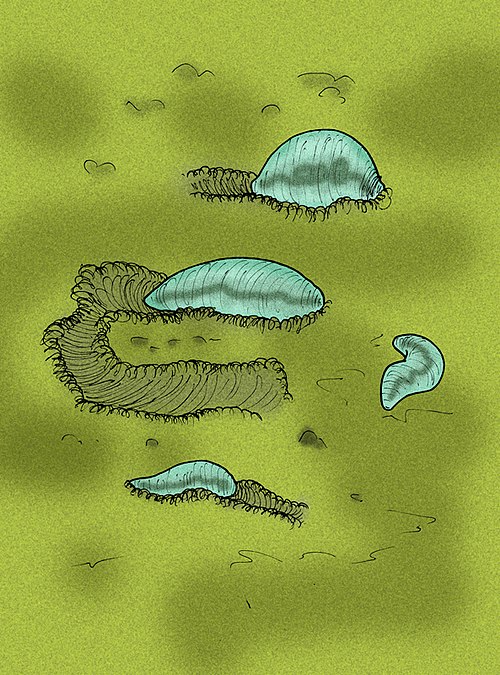
Ikaria wariootia, living 571–539 million years ago, is one of the oldest bilaterians identified.
Deuterostome
Videos
Deuterostomes are bilaterian animals of the superphylum Deuterostomia, which are typically characterized by their blastopore becoming their anus during embryonic development. Deuterostomia comprises t
Bilateria
…Cambrian, and are now by far the most successful animal lineage, with over 98% of known animal species. Bilaterians are traditionally classified as either deuterostomes or protostomes, on the basis of whether the blastopore becomes the anus or mouth. The phylum Xenacoelomorpha, once thought to be flatworms, was erected…

Early deuterostomes and their modern counterparts