Blood–brain barrier
Videos
The blood–brain barrier is a highly selective semipermeable border of endothelial cells that regulates the transfer of solutes and chemicals between the circulatory system and the central nervous syst
Solute permeability at the BBB vs. choroid plexus


Astrocytes surrounding capillaries in the brain (artistic rendition)

Sketch showing constitution of blood vessels inside the brain
Astrocyte
Videos
Astrocytes, also known collectively as astroglia, are characteristic star-shaped glial cells in the brain and spinal cord. They perform many functions, including biochemical control of endothelial cel
Blood–brain barrier
…protecting the brain from harmful or unwanted substances in the blood. The blood–brain barrier is formed by endothelial cells of the capillary wall, astrocyte end-feet ensheathing the capillary, and pericytes embedded in the capillary basement membrane. This system allows the passage of some small molecules…
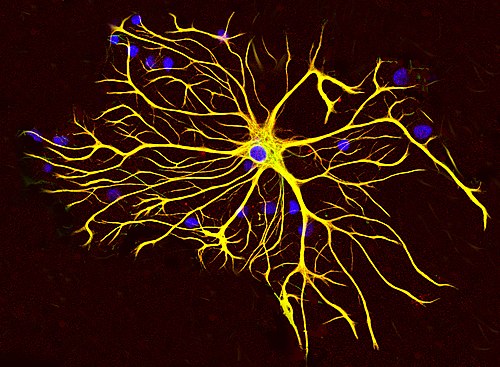
An astrocyte from a rat brain grown in tissue culture and stained with antibodies to GFAP (red) and vimentin (green). Both proteins are present in large amounts in the intermediate filaments of this cell, so the cell appears yellow. The blue material shows DNA visualized with DAPI stain, and reveals the nucleus of the astrocyte and of other cells. Image courtesy of EnCor Biotechnology Inc.
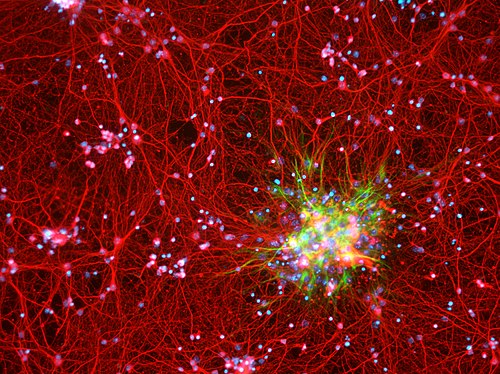
Astrocytes (green) in the context of neurons (red) in a mouse cortex cell culture

Astrocytes are depicted in red. Cell nuclei are depicted in blue. Astrocytes were obtained from brains of newborn mice.