Book cover
Videos
A book cover is any protective covering used to bind together the pages of a book. Beyond the familiar distinction between hardcovers and paperbacks, there are further alternatives and additions, such
Front cover of the St Cuthbert Gospel, c. 700; the original tooled red goatskin binding is the earliest surviving Western binding.


Ivory cover of the Codex Aureus of Lorsch, c. 810, Carolingian dynasty, Victoria and Albert Museum

One of the goldsmith covers from the so-called silver library of Duke Albrecht Hohenzollern in Königsberg, now in Nicolaus Copernicus University Library, c. 1555

Detail of the cover of a pocket edition of the Book of Common Prayer, vellucent binding by Cedric Chivers with Art Nouveau gold tooling, hand-painted design inlaid with mother of pearl
Book
Videos
A book is a written work of substantial length created by one or more authors. They can be distributed in various forms such as printed books, audiobooks, and electronic books. Books are broadly class
Book cover
…A book cover is any protective covering used to bind together the pages of a book. Beyond the familiar distinction between hardcovers and paperbacks, there are further alternatives and additions, such as dust jackets, ring-binding…

The Gutenberg Bible, published in the mid-15th century, was one of the first books to be printed using the printing press.

Jiahu symbols written on tortoise shells, such as the eye symbol in the bottom-right, are regarded as a form of proto-writing

Clay tablets from the library of Ashurbanipal
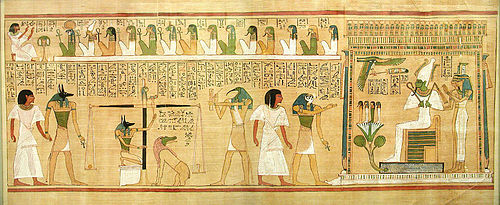
Book of the Dead of Hunefer; c. 1275 BC; ink and pigments on papyrus; 45 × 90.5 cm; British Museum (London)