British people
Videos
British people or Britons, also known colloquially as Brits, are the citizens and diaspora of the United Kingdom, the British Overseas Territories, and the Crown dependencies. British nationality law
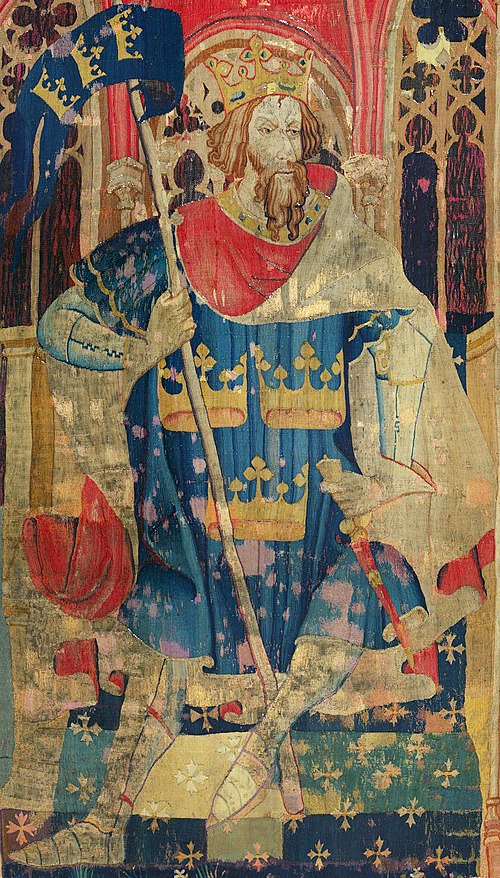
Medieval tapestry showing King Arthur, a legendary ancient British ruler who had a leading role in the Matter of Britain, a national myth used as propaganda for the ancestral origins of the British royal family and their British subjects

The Battle of Trafalgar by J. M. W. Turner (oil on canvas, 1822–1824) combines events from several moments during the Napoleonic Wars' Battle of Trafalgar—a major British naval victory upon which Britishness has drawn influence.
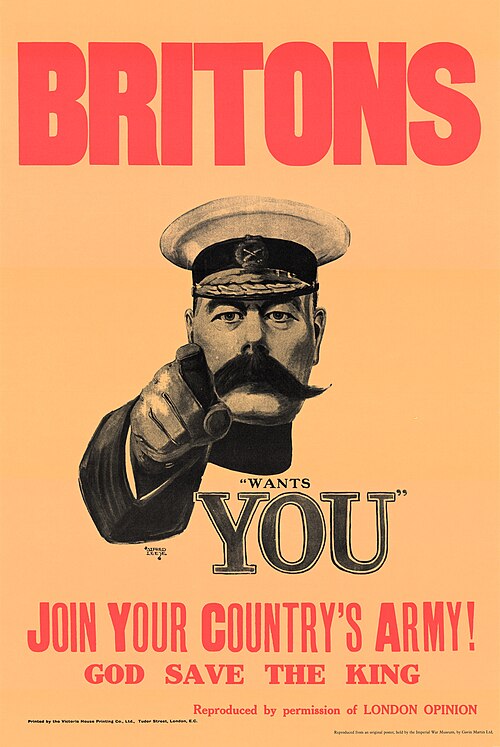
A famous First World War-era recruitment poster, stressing the concept of British national identity

Britons gathered in Whitehall to hear Winston Churchill's victory speech on 8 May 1945.
The United Kingdom of Great Britain and Ireland was established by the Acts of Union in 1801 that united the Kingdom of Great Britain and the Kingdom of Ireland into one unitary and sovereign state. I
British people
…outbreak of peace with France in the early 19th century, challenged the previous century's concept of militant Protestant Britishness. The new, expanded United Kingdom of Great Britain and Ireland meant that the state had to re-evaluate its position on the civil rights of Catholics, and extend its definition of Britishness to the Irish people…

The signing of the Treaty of Ghent ending the war with the United States (by Amédée Forestier, c. 1915)

A painting by James Pollard showing Trafalgar Square before the erection of Nelson's Column
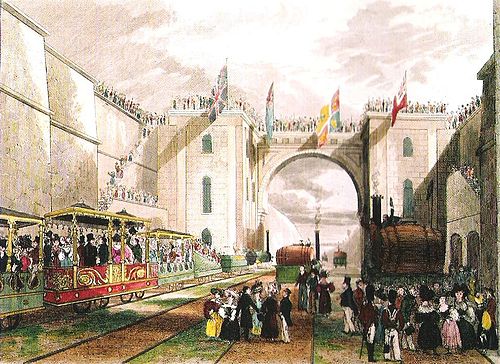
Opening of the Liverpool and Manchester Railway in 1830

The House of Commons, 1833 by George Hayter commemorates the passing of the Reform Act 1832. It depicts the first session of the newly reformed House of Commons on 5 February 1833. In the foreground, the leading statesmen from the Lords: Charles Grey, 2nd Earl Grey (1764–1845), William Lamb, 2nd Viscount Melbourne (1779–1848) and the Whigs on the left; and Arthur Wellesley, 1st Duke of Wellington (1769–1852) and the Tories on the right.