Buddhism in Vietnam
Videos
Buddhism in Vietnam, as practiced by the Vietnamese people, is a form of East Asian Mahayana Buddhism. It is the second largest religion in Vietnam. According to the Vietnamese government's 2019 Natio

Bái Đính Temple in Ninh Bình Province, Vietnam

Statue of Amitābha Buddha (A Di Đà Phật) on Fansipan (Phan Xi Păng) Mountain, Lào Cai Province.

Buddhist Arhat mural in Liên Hoa cave, Ninh Bình province, dated 10-11th century

Statue of Avalokiteśvara (Quan Âm), lacquered and gilded wood at the Bút Tháp Temple, dating from the Revival Lê era with inscription "autumn of the year Bính Thân" (1656).
Mahayana
Videos
Mahāyāna is the largest branch of Buddhism, followed by the older branch Theravada. It is a broad group of Buddhist traditions, texts, philosophies, and practices that developed in various regions and
Buddhism in Vietnam
…Buddhism in Vietnam (Vietnamese: Đạo Phật, 道佛 or Phật Giáo, 佛教), as practiced by the Vietnamese people, is a form of East Asian Mahayana Buddhism. It is the second largest religion in Vietnam. According to the Vietnamese government's 2019 National Population and Housing Census, approximately 4.6…

The Five Buddhas in Shishoin Temple (Tokyo). Mahāyāna holds there are multiple buddhas which one can interact with. These buddhas are also able to send manifestations to our world to teach and guide beings.

Mahāyāna Buddhist triad, including Bodhisattva Maitreya, the Buddha, and Bodhisattva Avalokiteśvara. 2nd–3rd century CE, Gandhāra
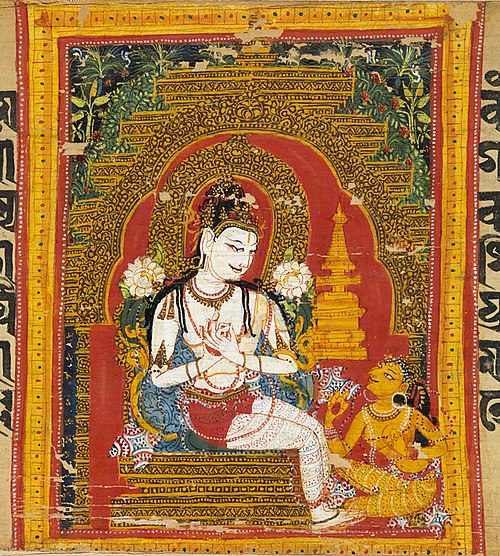
An illustration in a manuscript of the Aṣṭasāhasrikā Prajñāpāramitā Sūtra from Nalanda, depicting the bodhisattva Maitreya, an important figure in Mahāyāna

Seated Avalokiteshvara bodhisattva. Gandharan, from Loriyan Tangai. Kushan period, 1st – 3rd century CE. Indian Museum, Calcutta