Burgundian State
Videos
The Burgundian State was a composite monarchy ruled by the Dukes of Burgundy from the late 14th to the late 15th centuries, and which ultimately comprised not only the Duchy and County of Burgundy but

Military flag of the Burgundian state under Duke Charles the Bold
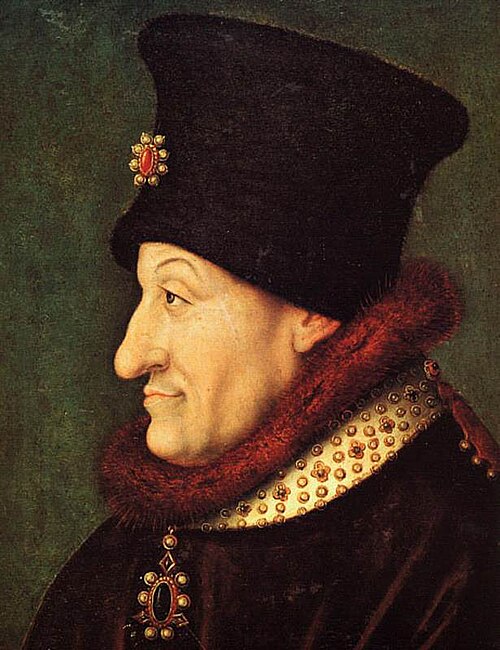
Anonymous portrait of Duke Philip the Bold
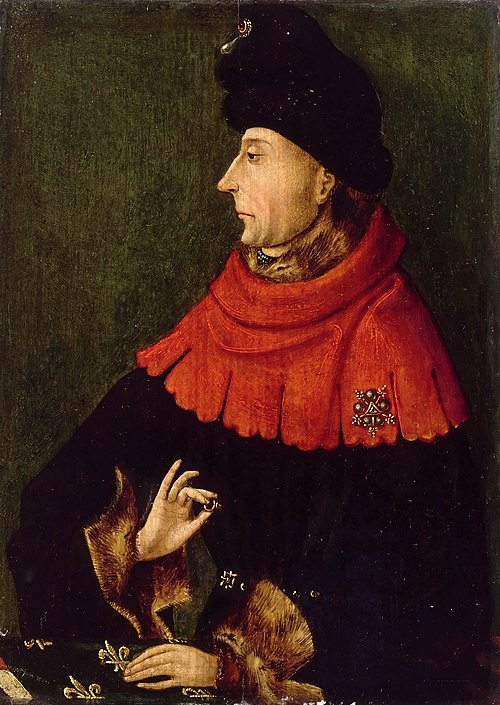
Portrait of Duke John the Fearless, after Jean Malouel

Portrait of Duke Philip the Good, after Rogier van der Weyden
Charles the Bold
Videos
Charles the Bold, also called the Rash, was Duke of Burgundy from 1467 to 1477. A member of the House of Valois-Burgundy, he was the only surviving legitimate son of Philip the Good and his third wife
Burgundian State
…focal point of courtly culture that set the fashion for European royal houses and their courts. It nearly turned into a kingdom in its own right, but Charles the Bold's early death at the Battle of Nancy put an end to his Lotharingian dream and his legacy passed to the House of Habsburg through the marriage of his…
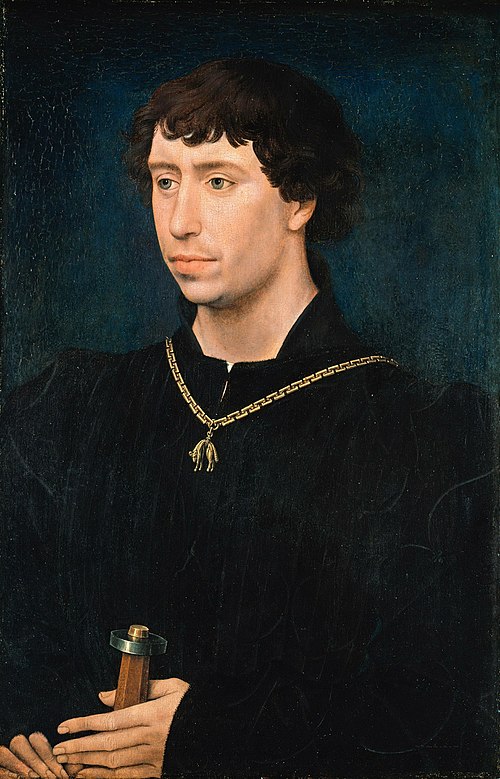
Charles the Bold in about 1461–1462, wearing the collar of the Order of the Golden Fleece, painted by Rogier van der Weyden

La Duchesse de Bourgogne arrêtée aux portes de Bruges by Sophie Frémiet. 19th-century depiction of the arrest of Isabella of Portugal, her son Charles, and their entourage at the gates of Bruges

Charles, aged 12 or 13, standing beside his father, Philip, Duke of Burgundy; Jean Wauquelin presenting his 'Chroniques de Hainaut' to Philip the Good, 1447

The Duke of Burgundy providing a sumptuous feast for Louis, Dauphin of France, by Job, 1905