Bytown
Videos
Bytown is the former name of Ottawa, Ontario, Canada. It was founded on September 26, 1826, incorporated as a town on January 1, 1850, and superseded by the incorporation of the City of Ottawa on Janu

Falls of the Rideau River, at the Ottawa River, 1826 by Thomas Burrowes

Western and Lesser Fall of the Rideau River; Barrack Hill and Upper Bytown in the left Distance, 1826 by Thomas Burrowes

Hull, (Lower Canada), on the Ottawa River; at the Chaudière Falls, 1830 by Thomas Burrowes

View at the West end of Wellington Street, Upper Bytown, looking east towards Lower Town in 1845 by Thomas Burrowes
Rideau Canal
Videos
The Rideau Canal is a 202-kilometre long canal that links the Ottawa River at Ottawa with the Cataraqui River and Lake Ontario at Kingston, Ontario, Canada. Its 46 locks raise boats from the Ottawa Ri
Bytown
…General Dalhousie which authorized Lieutenant Colonel John By to divide up the town into lots. Bytown came about as a result of the construction of the Rideau Canal and grew largely due to the Ottawa River timber trade. Bytown's first mayor was John Scott, elected in 1847. Bytown was located where the Rideau Canal…

The Ottawa Locks at Colonel By Valley

An engraving of the Rideau Canal locks at Bytown

1845 painting of the canal and Lower Town by Thomas Burrowes
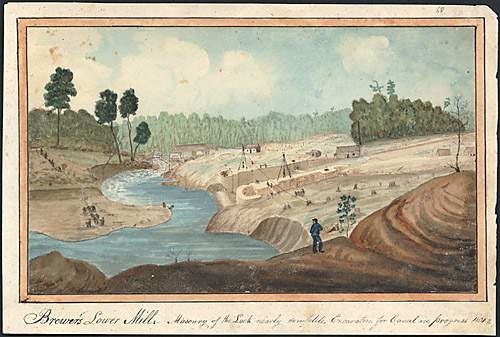
The lock at Lower Brewers nearing completion in 1831, by Thomas Burrowes