Byzantine senate
Videos
The Byzantine senate or Eastern Roman senate was a continuation of the Roman Senate, established in the 4th century by Constantine I. It survived for centuries, but the senate's powers varied greatly
Personification of the senate, from the consular diptych of Theodore Philoxenus, 525 AD


Solidus celebrating emperorship of Leo II. The emperor is coined as "Saviour of the Republic" — which the Empire continued to be in theory.

Depiction from the Madrid Skylitzes showing Empress Theodora conferring with the senate.

Emperor Basil I hosts a banquet for the senators.
Byzantine Empire
Videos
The Byzantine Empire, also known as the Eastern Roman Empire, was the continuation of the Roman Empire centred on Constantinople during late antiquity and the Middle Ages. Having survived the fall of
Byzantine senate
…the senate's powers varied greatly during its history and gradually diminished until its eventual disappearance in the 13th century. The senate of the Byzantine Empire originally consisted of Roman senators who happened to live in the East, or those who wanted to move to Constantinople, and a few other bureaucrats who…

Constantine I, also known as Constantine the Great, was Roman emperor from AD 306 to 337 and the first Roman emperor to convert to Christianity. He founded the city of Constantinople (now Istanbul) and made it the capital of the Empire, which it remained for over a millennium.

The Theodosian Walls of Constantinople, very important during the 717–718 siege
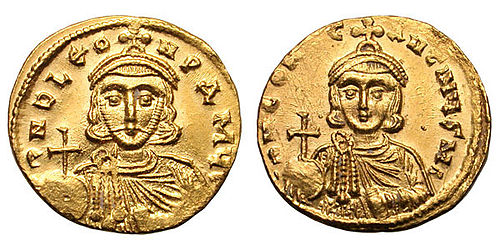
Gold solidus of Leo III (left) and his son and heir, Constantine V (right)

The seizure of Edessa (1031) by the Byzantines under George Maniakes and the counterattack by the Seljuk Turks