COVID-19 testing
Videos
COVID-19 testing involves analyzing samples to assess the current or past presence of SARS-CoV-2, the virus that causes COVID-19 and is responsible for the COVID-19 pandemic. The two main types of tes

The US CDC's COVID-19 laboratory test kit

Demonstration of a nasopharyngeal swab for COVID-19 testing

Demonstration of a throat swab for COVID-19 testing

A PCR machine
Polymerase chain reaction
Videos
The polymerase chain reaction is a laboratory method widely used to amplify copies of specific DNA sequences rapidly, to enable detailed study. PCR was invented in 1983 by American biochemist Kary Mul
COVID-19 testing
…tests include CRISPR, isothermal nucleic acid amplification, digital polymerase chain reaction, microarray analysis, and next-generation sequencing. Polymerase chain reaction (PCR) is a process that amplifies (replicates) a small, well-defined segment of DNA many hundreds of thousands of times, creating enough of it for…

Placing a strip of eight PCR tubes into a thermal cycler

An older, three-temperature thermal cycler for PCR

Ethidium bromide-stained PCR products after gel electrophoresis. Two sets of primers were used to amplify a target sequence from three different tissue samples. No amplification is present in sample #1; DNA bands in sample #2 and #3 indicate successful amplification of the target sequence. The gel also shows a positive control, and a DNA ladder containing DNA fragments of defined length for sizing the bands in the experimental PCRs.
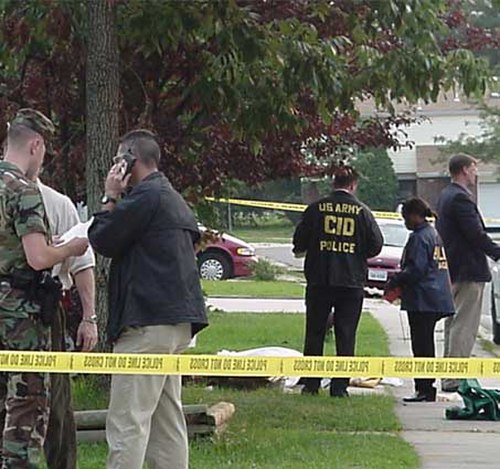
DNA samples are often taken at crime scenes and analyzed by PCR.