CPU cache
Videos
A CPU cache is a hardware cache used by the central processing unit of a computer to reduce the average cost to access data from the main memory. A cache is a smaller, faster memory, located closer to
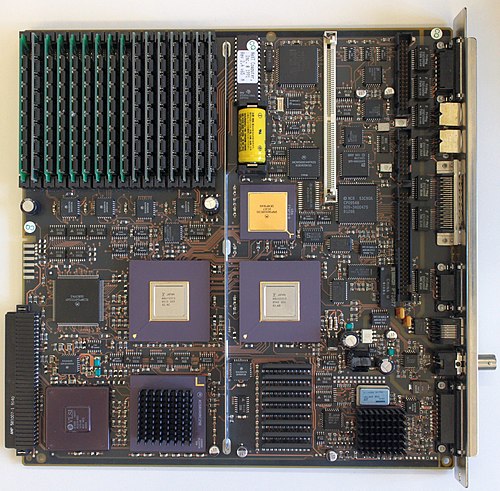
Motherboard of a NeXTcube computer (1990). At the lower edge of the image left from the middle, there is the CPU Motorola 68040 operated at 25 MHz with two separate level 1 caches of 4 KiB each on the chip, one for the instructions and one for data. The board has no external L2 cache.

Tag RAM on board of a Intel Pentium III

Example of a motherboard with an i386 microprocessor (33 MHz), 64 KiB cache (25 ns; 8 chips in the bottom left corner), 2 MiB DRAM (70 ns; 8 SIMMs to the right of the cache), and a cache controller (Austek A38202; to the right of the processor)
Central processing unit
Videos
A central processing unit, also known as a central processor, main processor, or simply processor, is the primary processor in a given computer. Its electronic circuitry executes instructions of a com
CPU cache
…A CPU cache is a hardware cache used by the central processing unit (CPU) of a computer to reduce the average cost (time or energy) to access data from the main memory. A cache is a smaller, faster memory, located closer…

The Core i9-14900KF, a 2023 CPU made by Intel

Inside a central processing unit: The integrated circuit of Intel's Xeon 3060, first manufactured in 2006
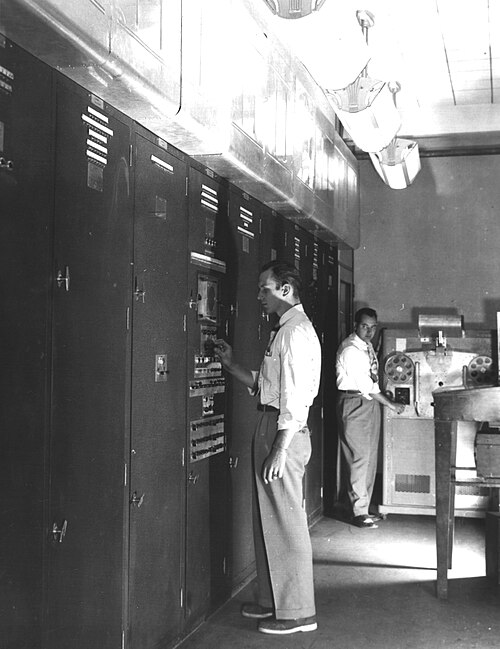
EDVAC, one of the first stored-program computers
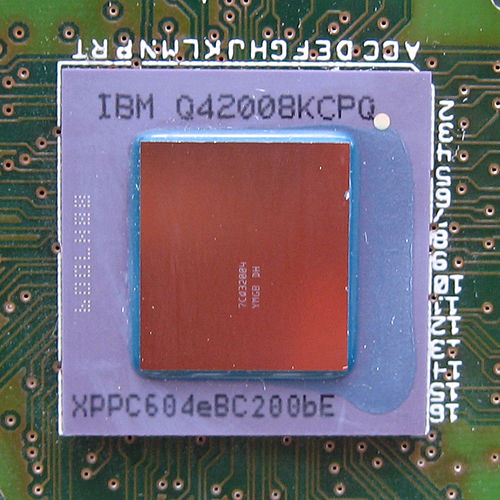
IBM PowerPC 604e processor