Cave painting
Videos
In archaeology, cave paintings are a type of parietal art, found on the wall or ceilings of caves. The term usually implies prehistoric origin. Several groups of scientists suggest that the oldest of
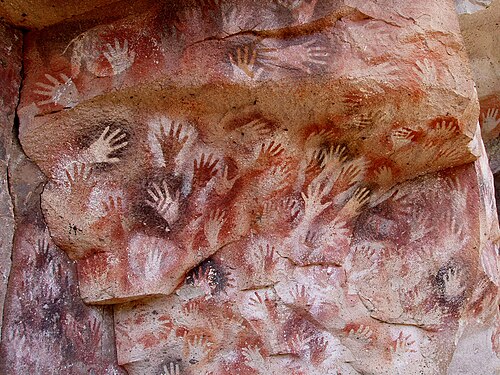
Cueva de las Manos, Perito Moreno, Argentina. The art in the cave is dated between 7,300 BC and 700 AD; stenciled, mostly left hands are shown.

One of the oldest known figurative paintings, a depiction of an unknown bovine, was discovered in the Lubang Jeriji Saléh cave and dated to be more than 40,000 (perhaps as old as 52,000) years old.

Inside of the Cave of El Castillo in Puente Viesgo, Cantabria (Spain). Dating back to 40,000 BC, El Castillo hosts the earliest figurative cave painting in Europe known to date.

An artistic depiction of a group of rhinoceros was completed in the Chauvet Cave 30,000 to 32,000 years ago.
Cueva de las Manos
Videos
Cueva de las Manos is a cave and complex of rock art sites in the province of Santa Cruz, Argentina, 163 km south of the town of Perito Moreno. It is named for the hundreds of paintings of hands stenc
Cave painting
…small farms on the American continents. Scientific studies confirm that the Capivara mountain range was densely populated in prehistoric periods. Cueva de las Manos (Spanish for "Cave of the Hands") is a cave located in the province of Santa Cruz, Argentina, 163 km (101 mi) south of the town of Perito Moreno, within…

Pinturas Canyon, view from the caves

Entrance to Cueva de las Manos
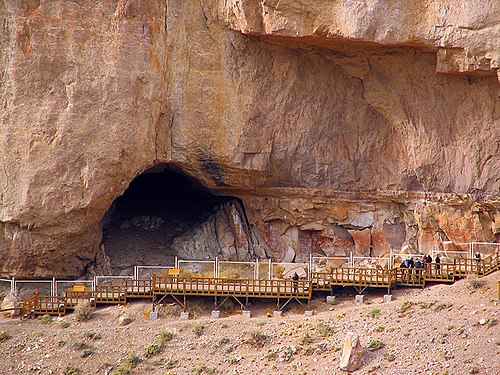
The entrance of the cave