Central Powers
Videos
The Central Powers, also known as the Central Empires, were one of the two main coalitions that fought in World War I. It consisted of the German Empire, Austria-Hungary, the Ottoman Empire, and the K

Leaders of the Central Powers (left to right): Wilhelm II of Germany; Franz Joseph I of Austria-Hungary; Mehmed V of the Ottoman Empire; Ferdinand I of Bulgaria; The caption reads: "Vereinte Kräfte führen zum Ziel" ("United Powers Lead to the Goal")

The Ottomans enter the conflict: propaganda postcard.

German propaganda postcard magnifying Bulgaria’s intervention in the conflict. Inscription: Bulgarien mit uns! Bulgaria with us!.

German soldiers on the battlefield in August 1914 on the Western Front, shortly after the outbreak of war
Ottoman Empire
Videos
The Ottoman Empire, historically also known as the Turkish Empire or Turkey, was a state that spanned much of Southeastern Europe, West Asia, and North Africa from the 14th century to the early 20th c
Central Powers
…Central Empires, were one of the two main coalitions that fought in World War I (1914–1918). It consisted of the German Empire, Austria-Hungary, the Ottoman Empire, and the Kingdom of Bulgaria; this was also known as the Quadruple Alliance. The Central Powers' origin was the alliance of Germany and Austria-Hungary…
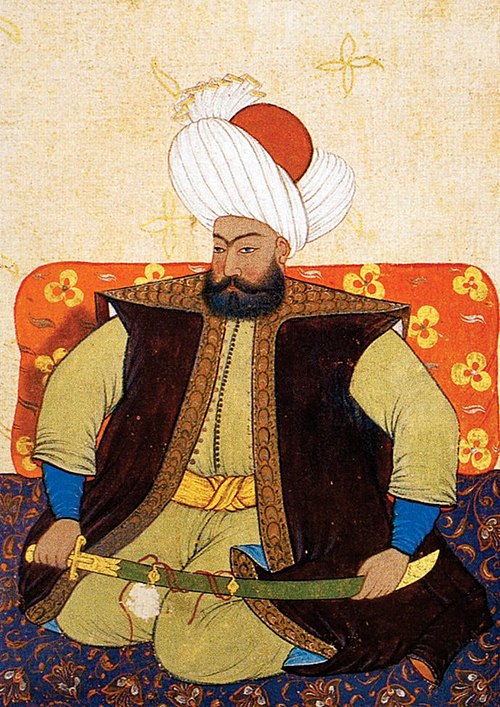
Ottoman miniature of Osman I by Yahya Bustanzâde (18th century)

The Battle of Nicopolis in 1396, as depicted in an Ottoman miniature from 1523

Sultan Mehmed the Conqueror's entry into Constantinople; painting by Fausto Zonaro (1854–1929)

Ottoman miniature of the Battle of Mohács in 1526