Central nervous system
Videos
The central nervous system is the part of the nervous system consisting primarily of the brain, and the spinal cord. The retina is also technically part of the CNS. The CNS is named so because the bra
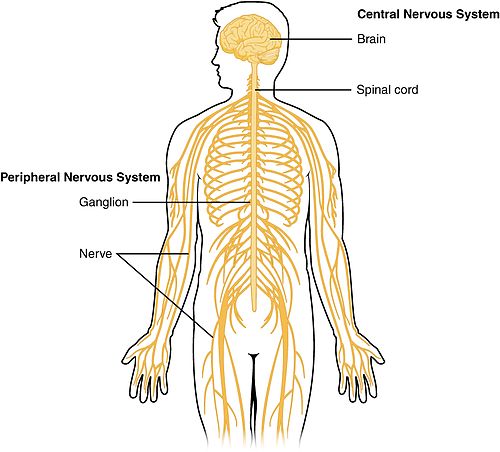
Schematic diagram showing the central and peripheral nervous system of a human

Dissection of a human brain with labels showing the clear division between white and gray matter.

Different ways in which the CNS can be activated without engaging the cortex, and making us aware of the actions. The above example shows the process in which the pupil dilates during dim light, activating neurons in the spinal cord. The second example shows the constriction of the pupil as a result of the activation of the Eddinger-Westphal nucleus (a cerebral ganglion).

Schematic image showing the locations of a few tracts of the spinal cord.
Brain
Videos
The brain is an organ that serves as the center of the nervous system in all vertebrate and most invertebrate animals. It consists of nervous tissue and is typically located in the head, usually near
Central nervous system
…The central nervous system (CNS) is the part of the nervous system consisting primarily of the brain, and the spinal cord. The retina is also technically part of the CNS. The CNS is named so because the brain integrates the received information and…
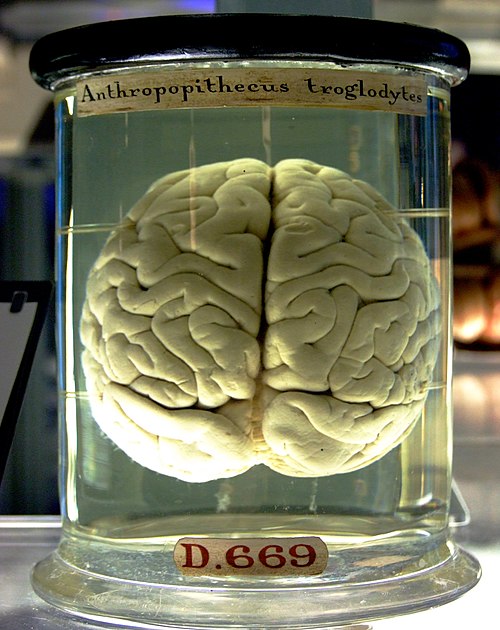
Brain of a chimpanzee

Model of a human brain

Cross section of the olfactory bulb of a rat, stained in two different ways at the same time: one stain shows neuronal cell bodies, the other shows receptors for the neurotransmitter GABA.
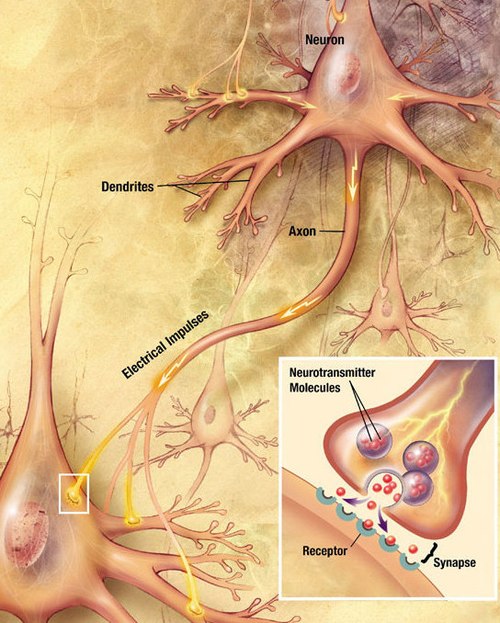
Neurons generate electrical signals that travel along their axons. When an electrical impulse reaches a junction called a synapse, it causes a neurotransmitter to be released, which binds to receptors on other cells and thereby alters their electrical activity.