Cercidoideae
Videos
Photos
Cercidoideae is a subfamily in the pea family, Fabaceae. Well-known members include Cercis (redbuds), including species widely cultivated as ornamental trees in the United States and Europe, Bauhinia, widely cultivated as an ornamental tree in tropical Asia, and Tylosema, a semi-woody genus of Africa. The subfamily occupies a basal position within the Fabaceae and is supported as monophyletic in many molecular phylogenies. At the 6th International Legume Conference, the Legume Phylogeny Working Group proposed elevating the tribe Cercidae to the level of subfamily within the Leguminosae (Fabaceae). The consensus agreed to the change, which was fully implemented in 2017. It has the following clade-based definition:The most inclusive crown clade containing Cercis canadensis L. and Bauhinia divaricata L. but not Poeppigia procera C.Presl, Duparquetia orchidacea Baill., or Bobgunnia fistuloides (Harms) J.H.Kirkbr. & Wiersema.

Image: Cercis siliquastrum MHNT

Image: Bauhinia variegata (Kachnar) in Hyderabad, AP W IMG 1463

Lysiphyllum hookeri

Bauhinia divaricata
Fabaceae
Videos
Photos
The Fabaceae or Leguminosae, commonly known as the legume, pea, or bean family, are a large and agriculturally important family of flowering plants. It includes trees, shrubs, and perennial or annual herbaceous plants, which are easily recognized by their fruit (legume) and their compound, stipulate leaves. The family is widely distributed, and is the third-largest land plant family in number of species, behind only the Orchidaceae and Asteraceae, with about 765 genera and nearly 20,000 known species.
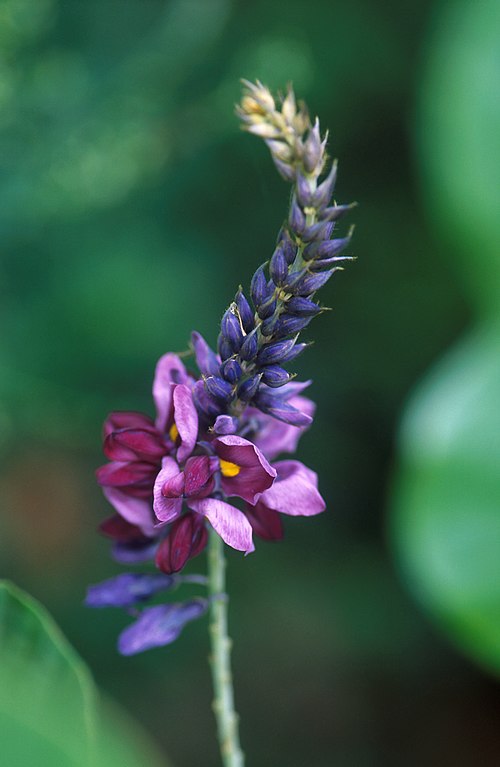
Fabaceae
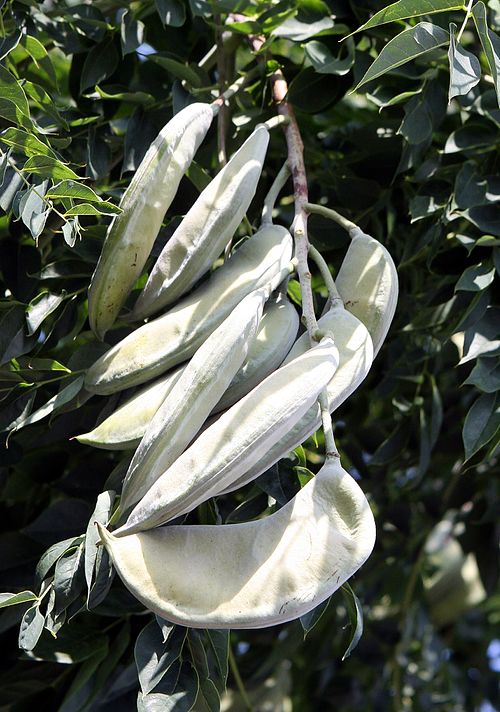
The fruit of Gymnocladus dioicus

Legume of Vicia sativa

Roots of Vicia with white root nodules visible.