Champa
Videos
Champa were a collection of independent Cham polities that extended across the coast of what is present-day central and southern Vietnam from approximately the 2nd century CE until 1832.
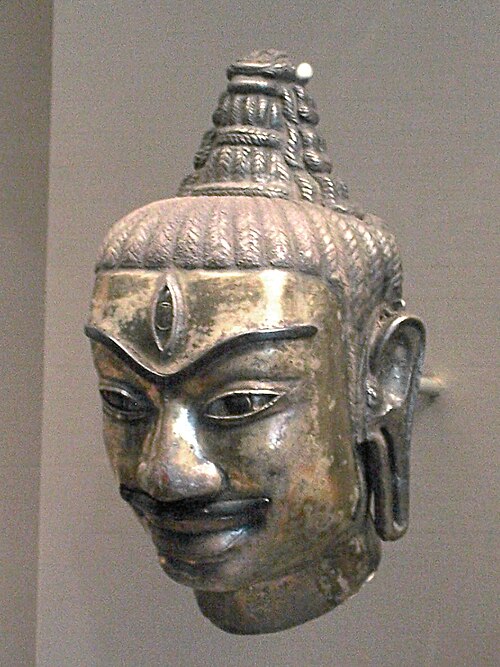
This Cham head of Shiva was made of electrum around 800. It decorated a kosa, or metal sleeve fitted to a liṅgam. One can recognise Shiva by the tall chignon hairstyle and by the third eye in the middle of his forehead.
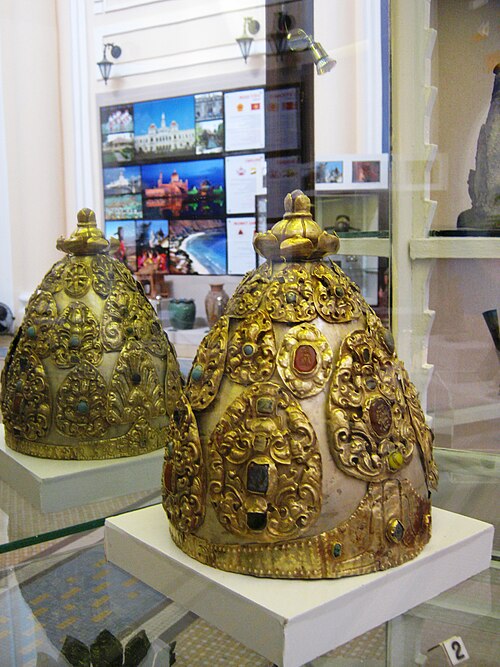
Crown of Champa in 7th and 8th century. (Museum of Vietnamese History)
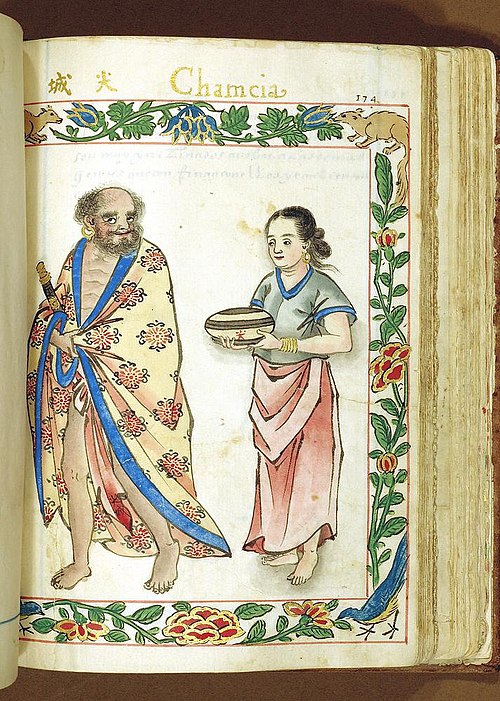
Depiction of a couple of highland man and Cham lady in the Boxer Codex from 1590
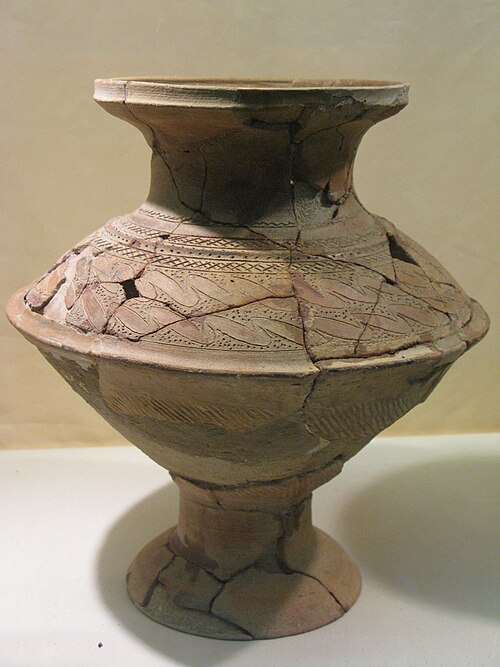
Pottery vase of the Sa Huỳnh culture, 1000 BC. The Sa Huỳnh people were the prehistoric ancestors of all Chamic peoples.
Vietnam
Videos
Vietnam, officially the Socialist Republic of Viet Nam, is a country at the eastern edge of Mainland Southeast Asia. With an area of about 331,000 square kilometres and a population of over 102 millio
Champa
…Scholars agree that historically Champa was divided into several regions or principalities spread out from south to north along the coast of modern Vietnam and united by a common language, culture, and heritage. It is acknowledged that the historical record is not equally rich for each of the regions in…

Capture of Saigon by Charles Rigault de Genouilly on 18 February 1859

The Grand Palais built for the 1902–1903 world's fair, when Hanoi became French Indochina's capital

First Nationwide Congress of Emulation Fighters, Democratic Republic of Vietnam, 1952

Three US Fairchild UC-123B aircraft spraying Agent Orange during the Operation Ranch Hand as part of a herbicidal warfare operation depriving the food and vegetation cover of the Việt Cộng, c. 1962–1971